Inspiration or Imitation?
There’s a fine line in board games between inspiration and imitation. Mechanics are never truly sacred; designers borrow, remix, and reimagine constantly, and that’s part of the beauty of the hobby. You can’t exactly copyright “draw two cards, play one” or “place a worker to gain resources.”
What separates inspiration from duplication is how those familiar parts are stitched together. A borrowed idea in the right context can feel brand new, while the same idea dropped into a box with a different coat of paint can leave you with déjà vu.
A Splash of Colour
The best designs wink at their influences while still giving you something distinct. It’s like tasting garlic and olive oil in a dish but being surprised by how they’re used, how they transform into something wholly original. But sometimes you shuffle the tiles, take your first turn, and realize you’re not learning a new recipe at all, you’re just eating the same pasta with a slightly different sauce. Not bad, just not as exciting as you’d hoped.
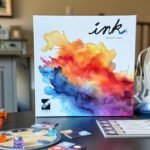
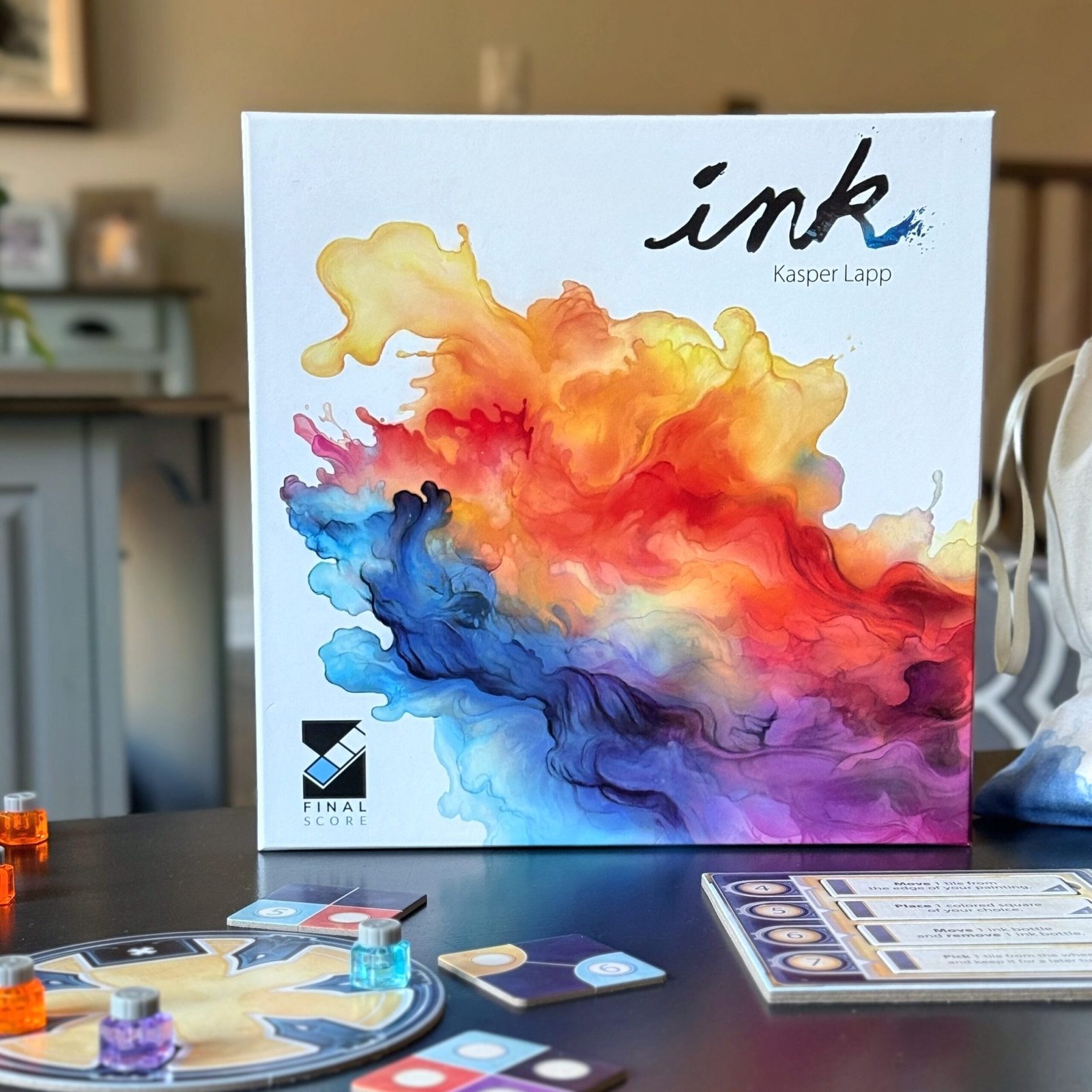
That was our experience with Ink.
A Brief How-To Play
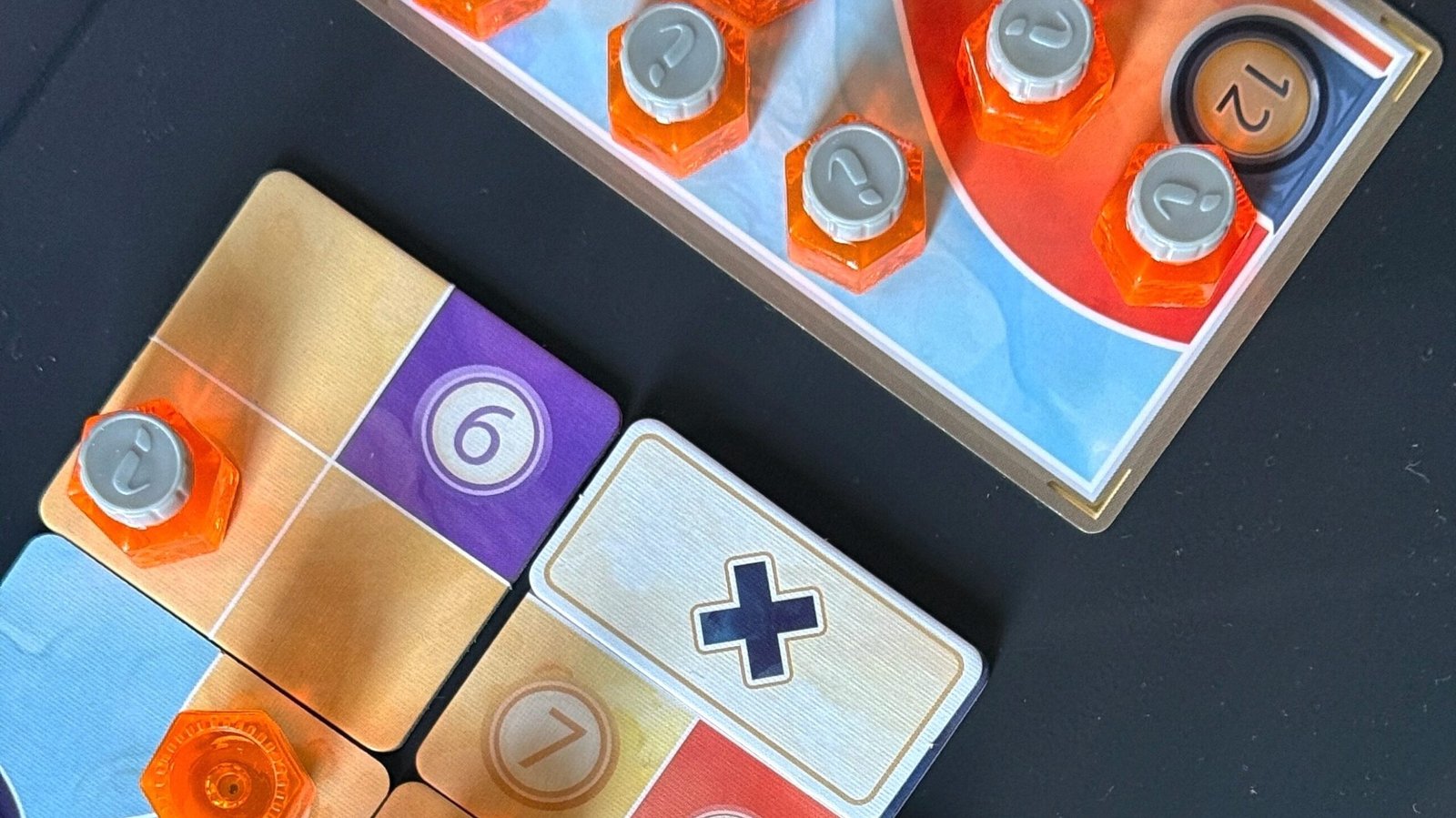
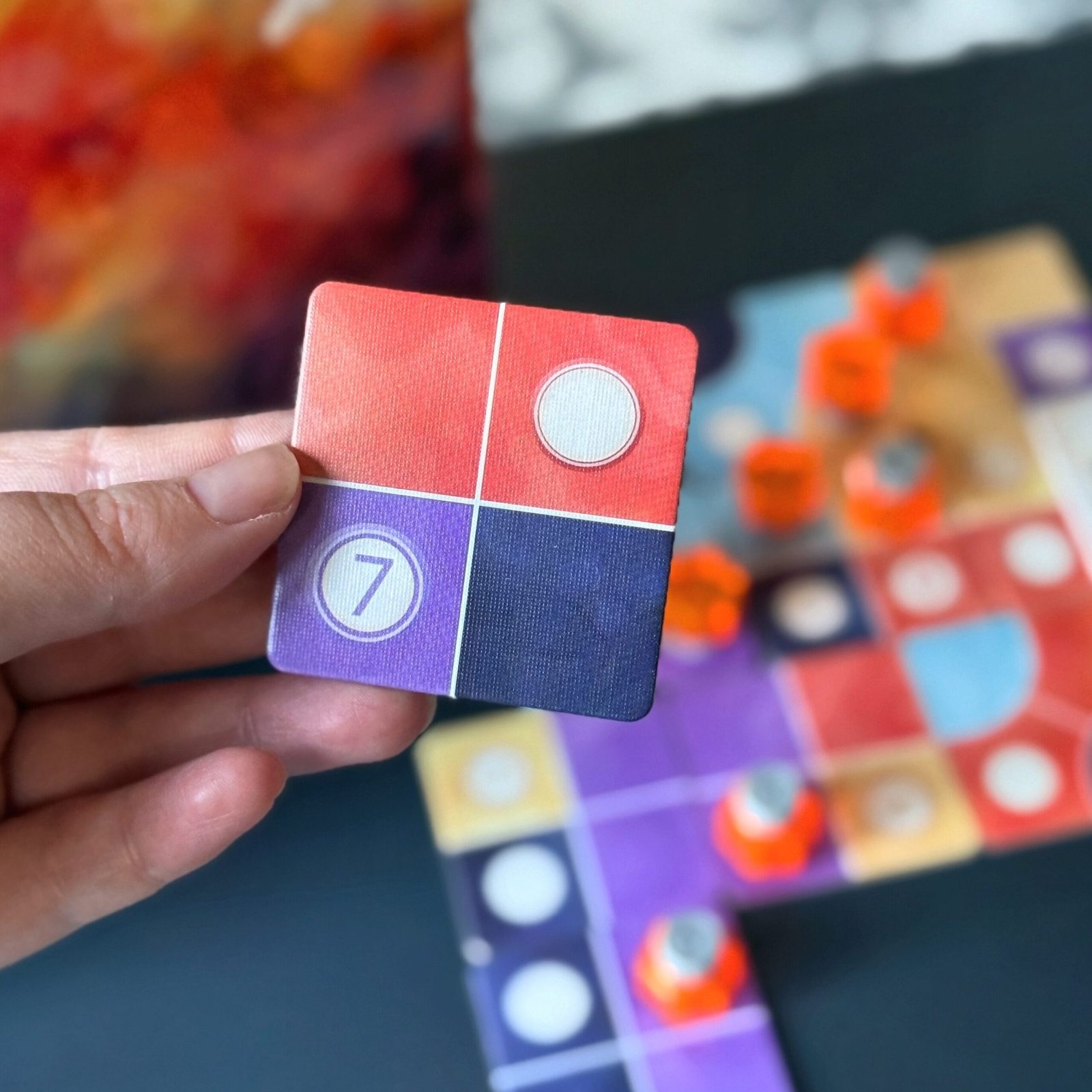
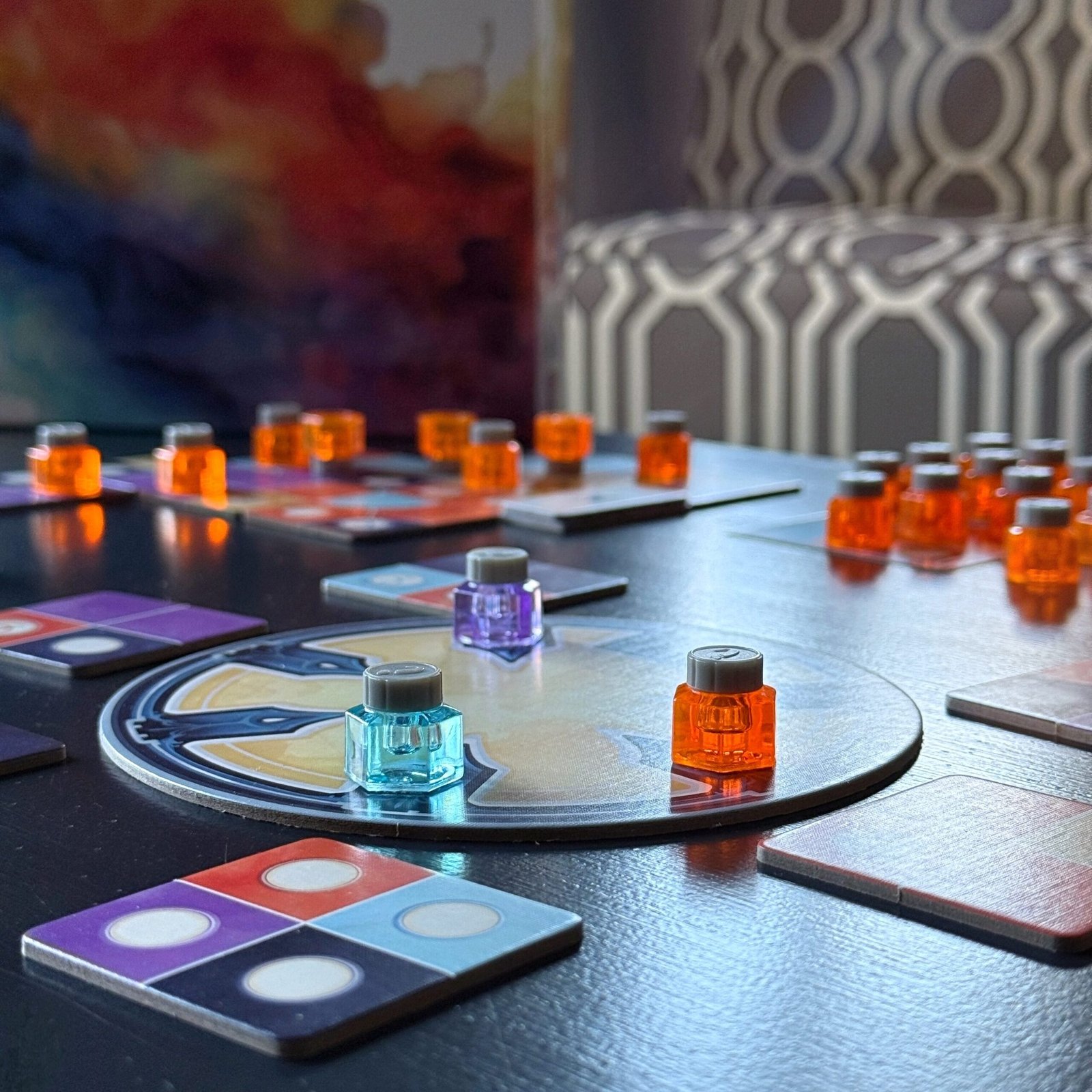
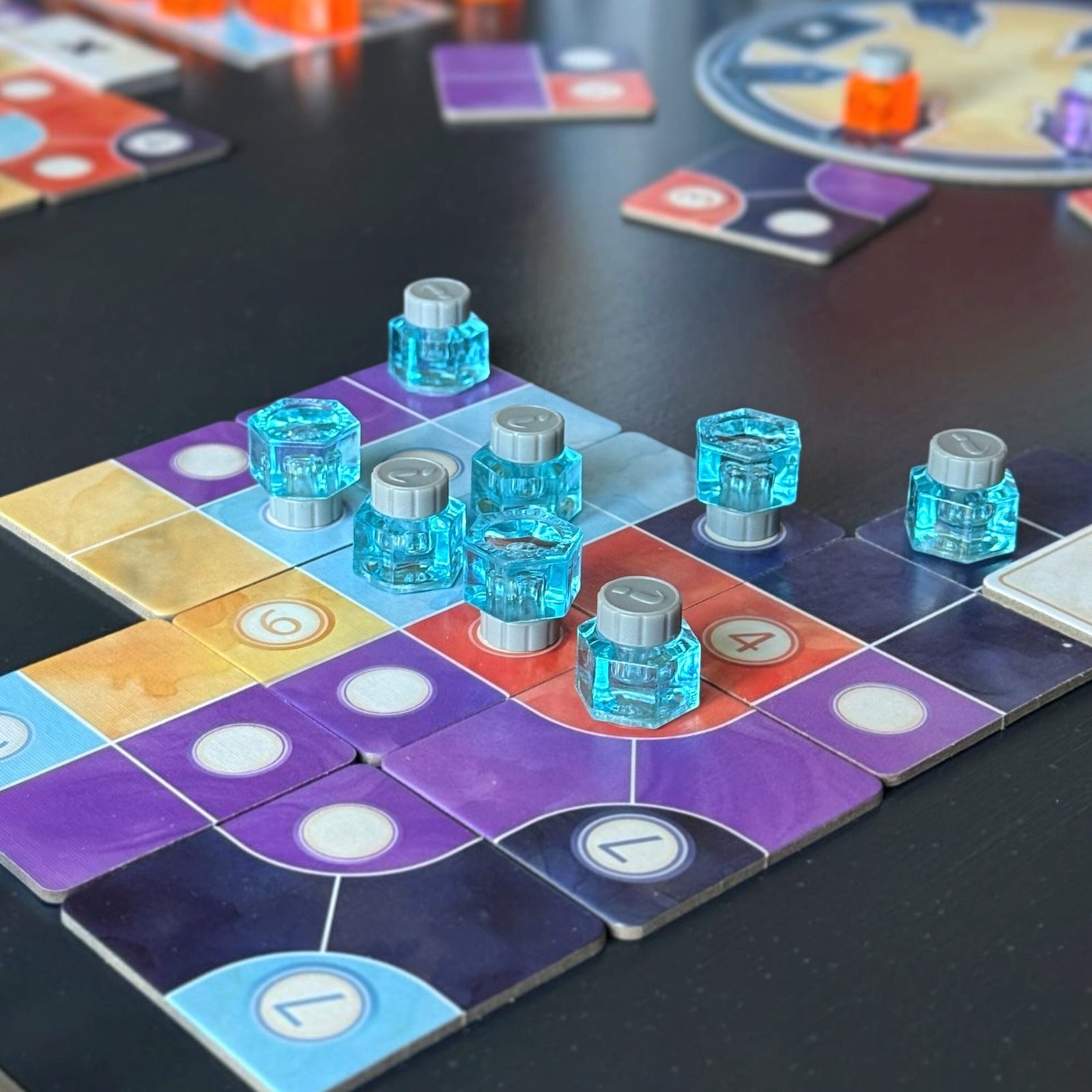
The core loop is straightforward. On your turn, you draft a tile from a central rondel and add it to your tableau. Each tile is split into coloured spaces, some of which have spots; some blank, some marked with numbers. The numbered spots are objectives: a five on red means you’ll need five connected red spaces to complete it. When you meet that requirement, you place one of your inkwells on the numbered space, then cover any linked blank spaces in that group as well. Your aim is to place all of your inkwells before anyone else does.
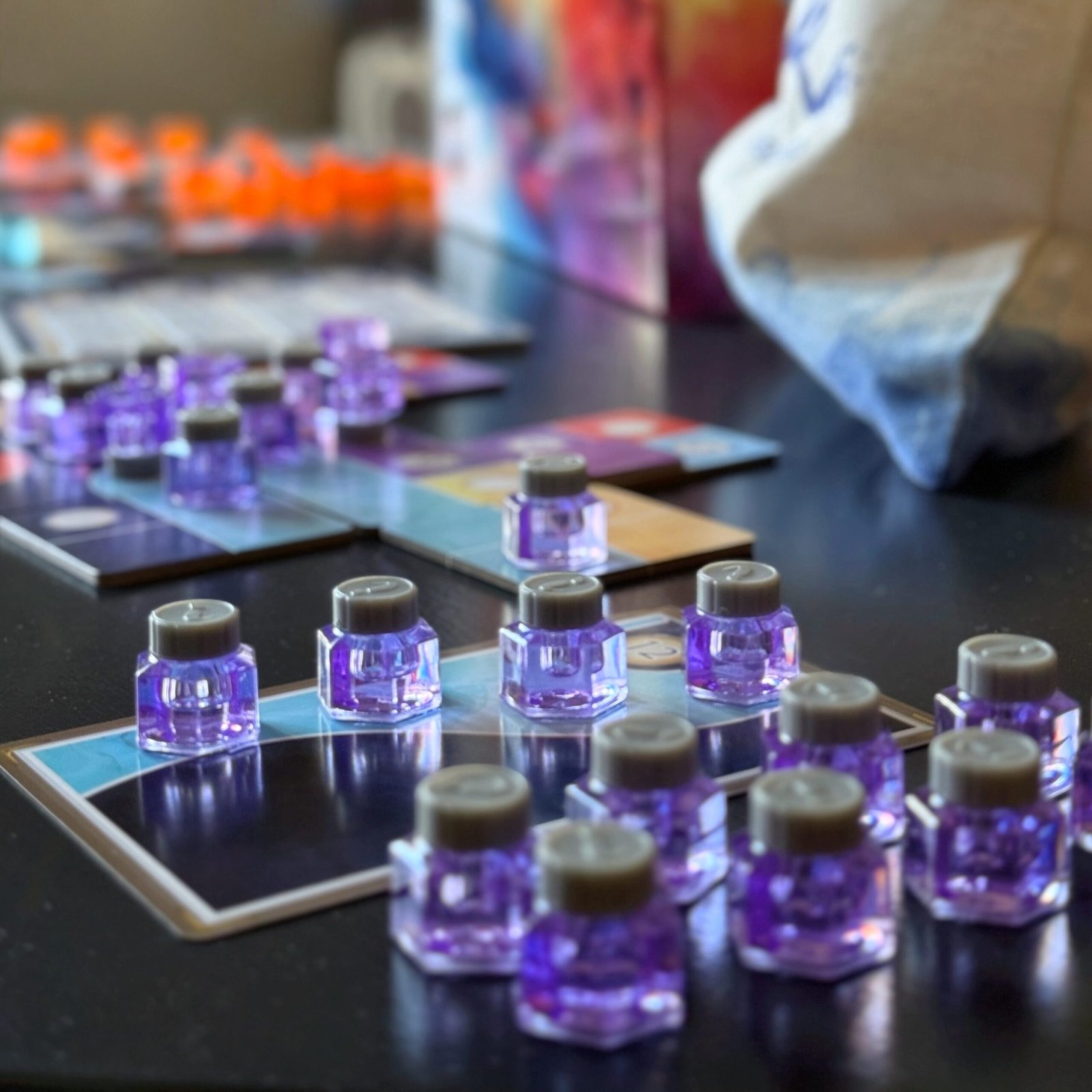
Half of your inkwells are tied to a pair of specific colours, while the rest can go anywhere, which gives you something to prioritize as you draft. Larger completed groups give you more bottles to place and may even unlock bonus actions that let you bend the rules or manipulate inkwells in your tableau. Each lap around the rondel also forces you to take a blocking tile, which covers two of your spaces and can either ruin a carefully laid plan or, more strategically, patch up areas you didn’t intend to grow.
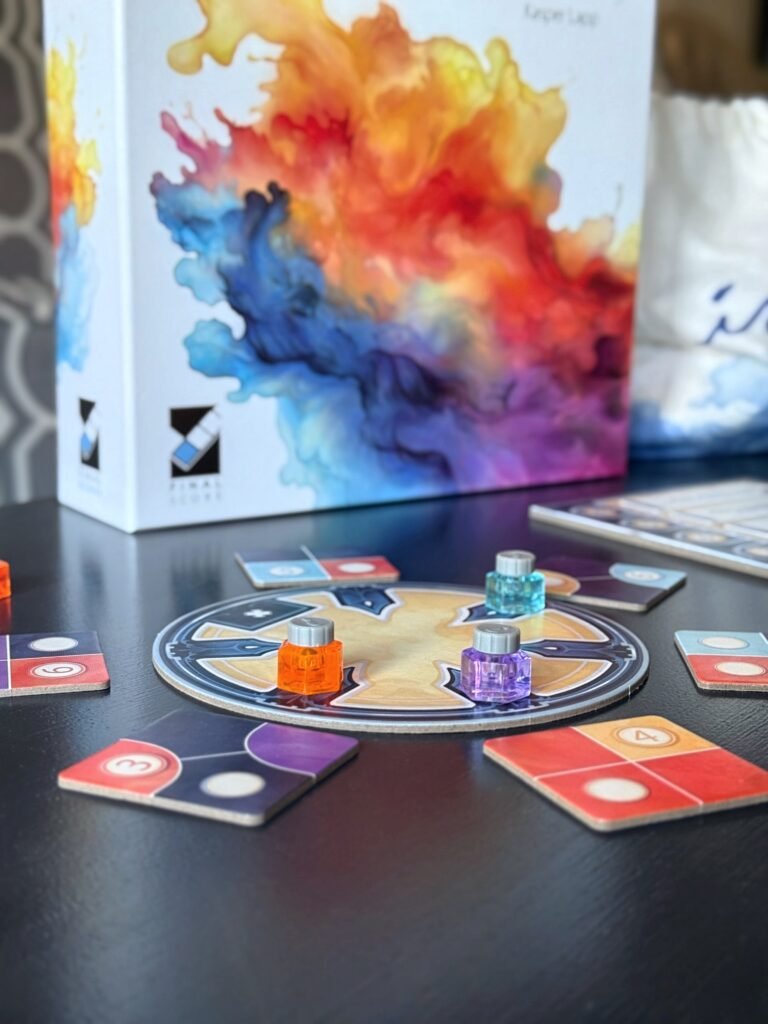
The rules are quick to teach, turns are fast, and the game wraps up in under an hour. You finish with a splash of colour in front of you that looks as pretty as it is puzzly.
The Outline Shows Through
On the surface, that all works. The puzzle is clear, the components are charming, and the little tactical choices give you something to chew on. But the more we played, the more its familiar outline came into focus.
This is Framework with new ink.
Both games revolve around building colour groups to meet objectives, racing to clear your supply, and trying to squeeze efficiency out of every placement. Only here the race feels gentler, the pressure softer, and the tension diluted by added layers that don’t always add much.
Blotted By The Details
The rondel draft looks clever but never forced us into difficult decisions. We rarely needed to move more than a space or two to grab something useful, and taking blocking tiles was never particularly punishing; you could just drop them over areas you didn’t plan to expand anyway.
The objectives, while easy to understand, lacked the variability of Framework’s either-or-goals, which give you flexibility and force you to pivot midstream. And the inkwells, meant to be the game’s defining twist, often felt unnecessary. It was surprisingly easy to place them all, which erased the sense of urgency that makes Rosenberg’s design so gripping.
Final Thoughts: Smudged But Serviceable
That’s not to say Ink is a bad game. If you’ve never played Framework, it could feel entirely fresh. The rondel might strike you as an engaging drafting system, the blocking tiles as cheeky fun, the inkwells as a charming flourish. The puzzle still functions, and it’s approachable enough that anyone could sit down and enjoy it. But for us, having already fallen for the crisp, intertwined design of Framework, Ink felt like its slower, fussier shadow. The extras cluttered rather than clarified, leaving us with a puzzle that looked cozy but played to sedate.
So no, Ink isn’t a disaster. It’s a perfectly serviceable spatial game with smooth turns, good production, and plenty of replay value. But it’s also a game we couldn’t shake the feeling we’d already played, and one that reminded us why sometimes less really is more. For us, it was a system we loved refilled with new ink, but one that left us wishing for the clarity of the original bottle.
Corinna’s Rating: 7.0
Duncan’s Rating: 5.9
Check Out Ink On Board Game Geek For More Information
A copy of Ink was generously provided by Asmodee Canada for content creation.