
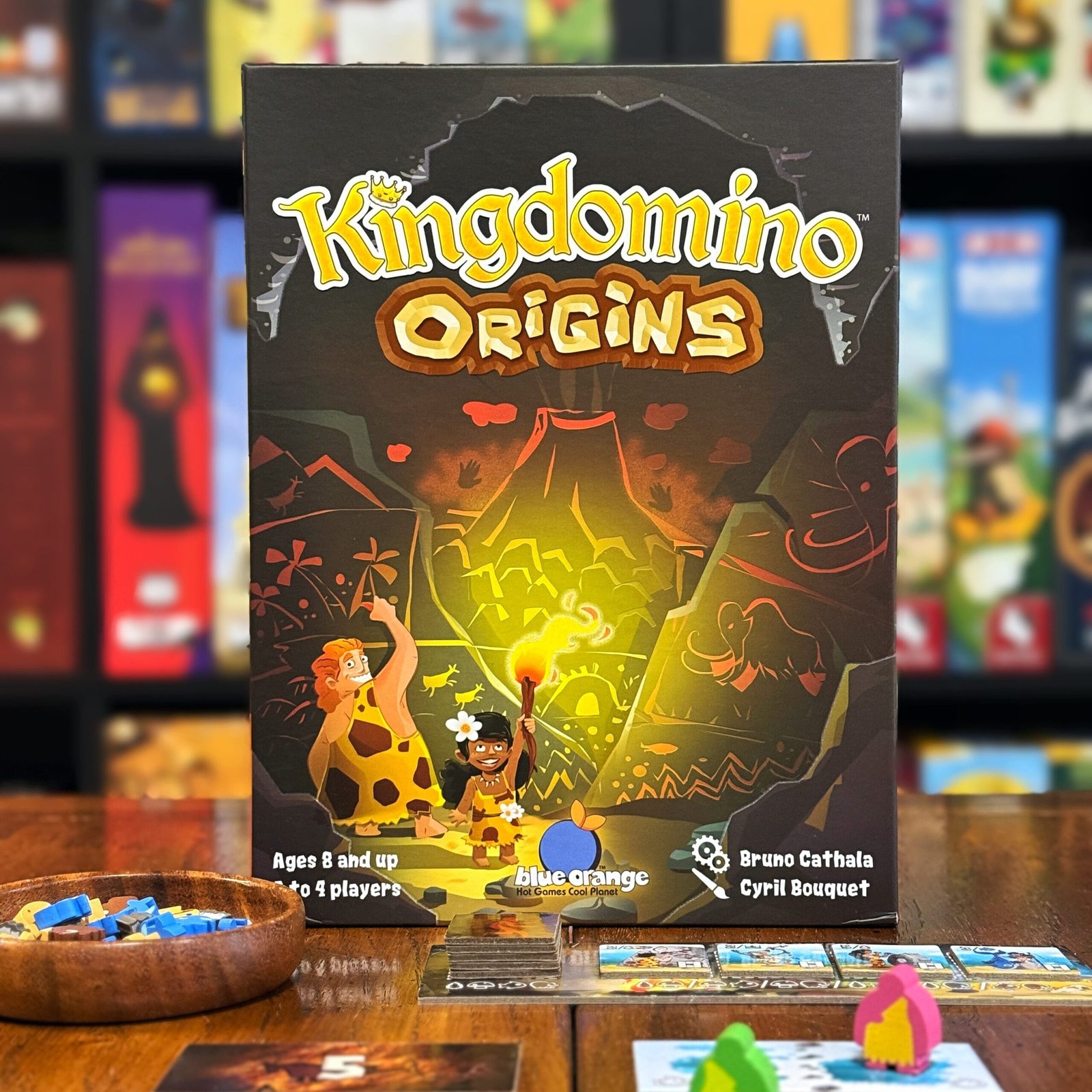
Do you ever get that itch? Not the one that flares up when you see metal coins, hand-painted minis, or even a wooden insert that costs more than the game itself. No, that subtler itch. The one that nags at the back of your brain, whispering that the game you already own is suddenly outdated. Because there it is, a suspiciously familiar box staring you down, winking from the shelf, promising cleaner rules, shinier art, and maybe even an expansion or two snuggled into the base game.
It’s a nuisance itch—the kind that dares you to scratch. Because if you do, you’re not just buying cardboard. You’re replacing something loyal, something that has already given you nights of fun. And yet… maybe the new edition really is better. Maybe the flow is smoother, the fiddly bits are fixed, the expansions baked right in. Or maybe you’re just a collector, and the shelf won’t feel complete until every box lines up like ducks in a row, each one grinning with a slightly different cover.
When Is It Okay to Scratch?
If your original copy is fraying at the edges, warped boards and all, maybe it’s earned a dignified retirement. If the new edition truly reshapes the experience, giving you something fresh to sink your teeth into, the splurge makes sense. But often the choice isn’t that clean. Because without a good enough reason, aren’t you just buying déjà vu with extra cardboard?
And yet the cycle keeps spinning. Publishers know we’ll line up for facelifts and re-themes. Heavier games get “streamlined,” lighter ones slip into new costumes, and somehow both the purists and the magpies are satisfied. Some cling fiercely to the original, some leap onto the latest, and many, let’s be honest, end up with both.
Why? We tell ourselves it’s for comparison, for variety, for “options.” But maybe it’s just that we enjoy seeing the same idea refracted through a new lens, like hearing our favourite song remixed three different ways.
Enter Kingdomino Origins
Which is exactly how we wound up with three iterations of the Kingdomino family sitting side by side on our shelf.
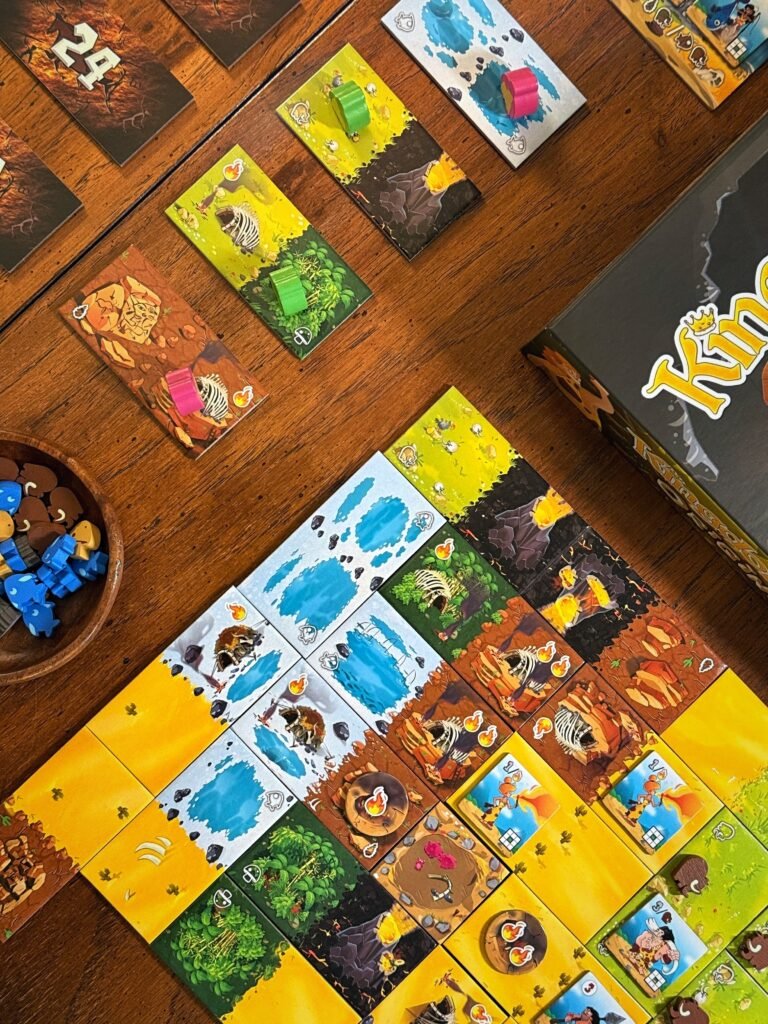
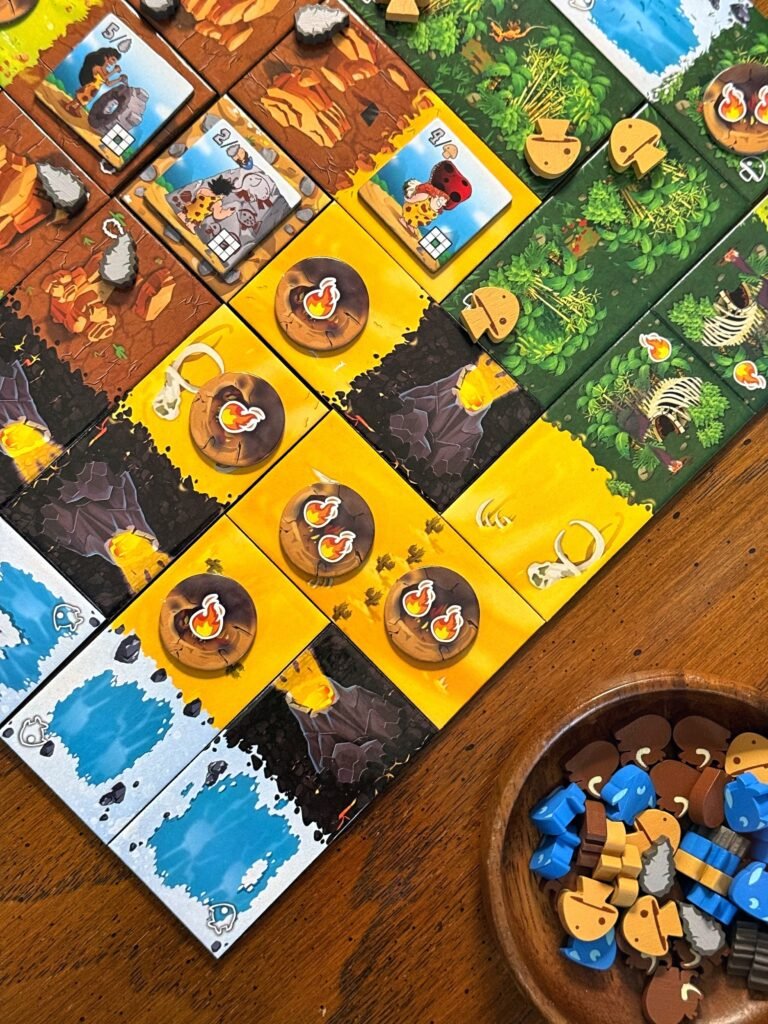
If you’ve played the first two Kingdomino titles, you already know the drill. Everyone drafts domino-style tiles to expand a 5×5 (or 7×7) grid. The aim is to chain matching terrains together, multiplying their size by the number of scoring symbols printed within them. In Kingdomino, it was crowns. In Origins, it’s fire.
Crowns to Fire
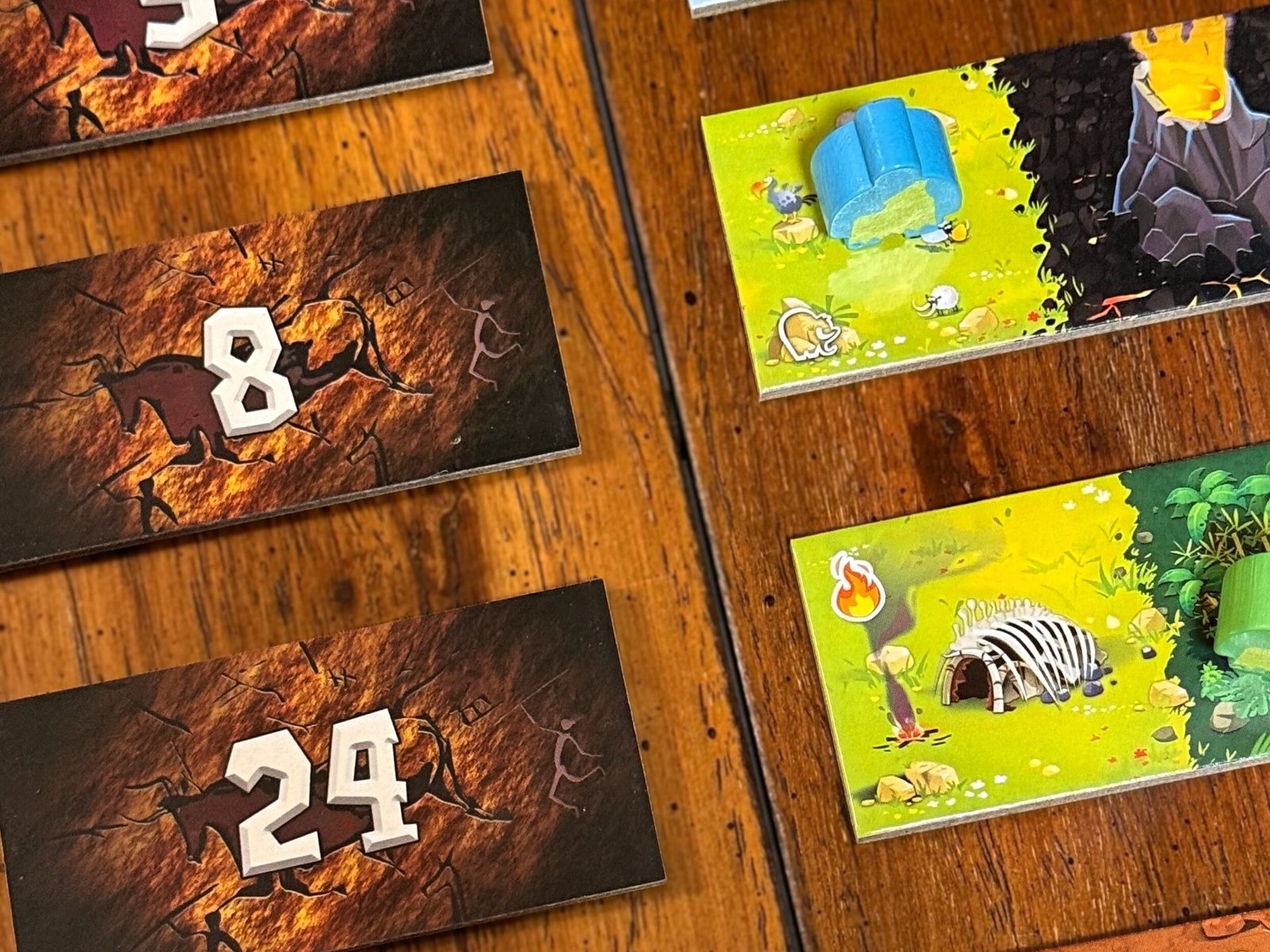
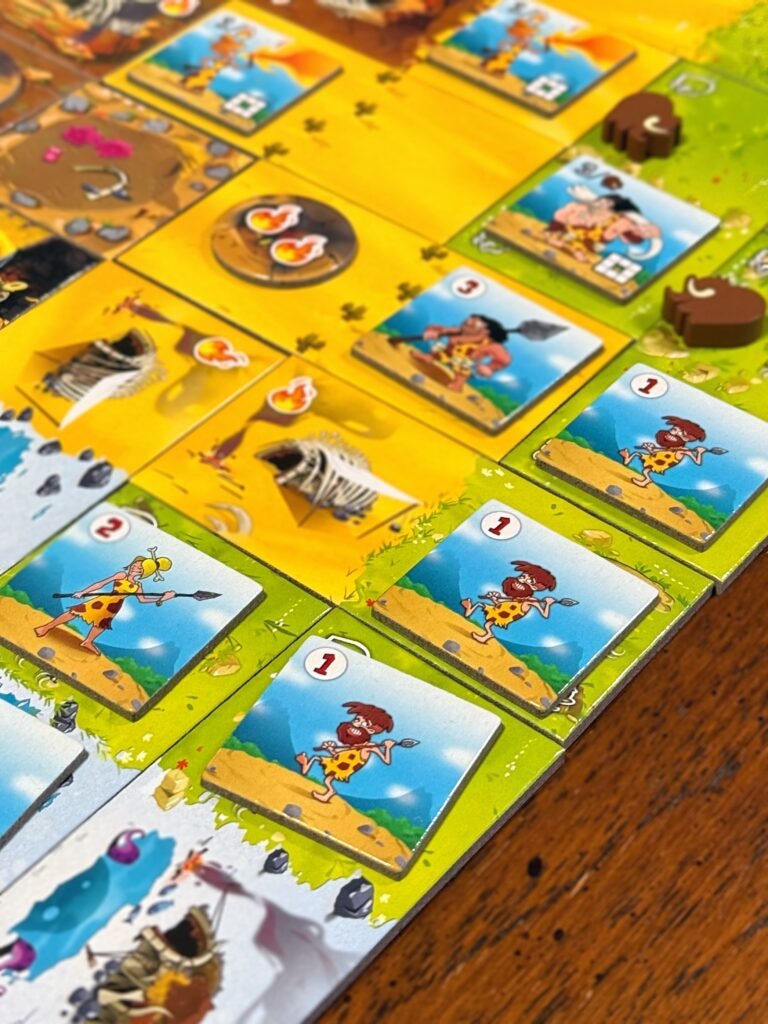
Volcano tiles erupt tokens across your board: single flames shoot three spaces, doubles two, triples one. This means you can steer fire to neglected areas or turbocharge a section that was already promising. In Kingdomino proper, there was always the risk of building a huge but crownless meadow that stubbornly refused to matter. Origins fixes that with flexible fire. Thematically, it works (volcanoes erupt, right?) and mechanically, it gives players more agency. Already, the itch feels worth scratching.
Three Ways to Play
But Origins doesn’t stop there. The box actually contains three different ways to play.
Discovery Mode
Discovery Mode is the stripped-down version, perfect if you’re new. Think of it as “classic Kingdomino, but hotter.” Same breezy teach, same speedy 15-minute play, but with volcanoes remixing the puzzle in just the right way. It’s the version we’d happily pull out for family or new gamers.
Totem Mode
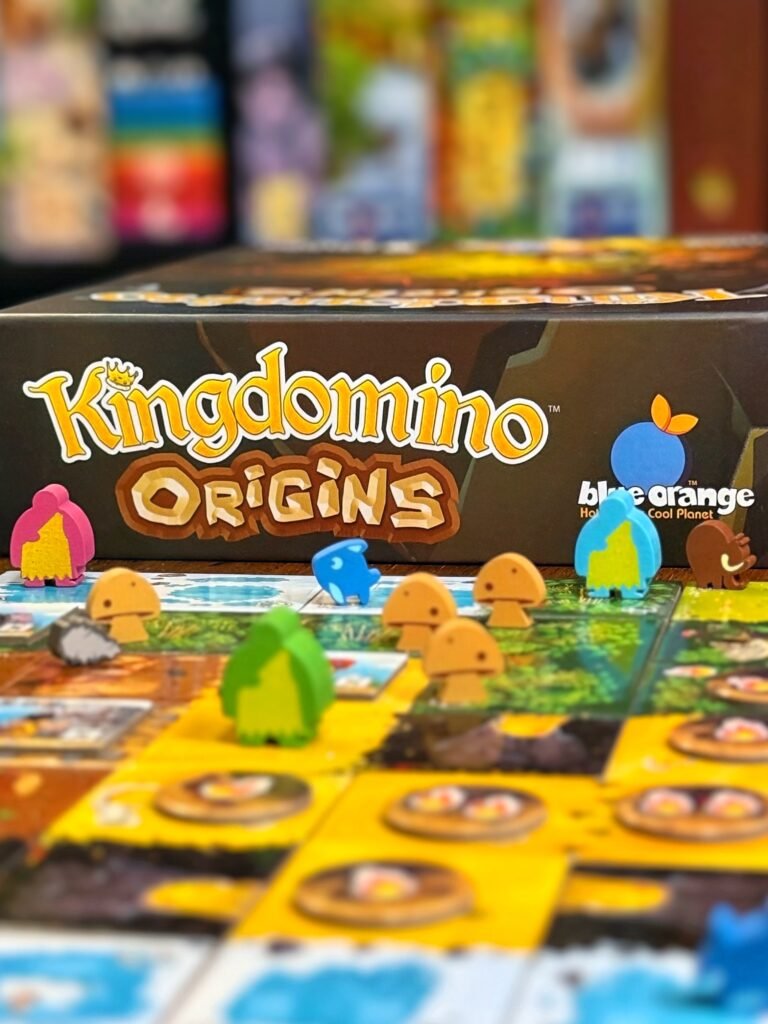
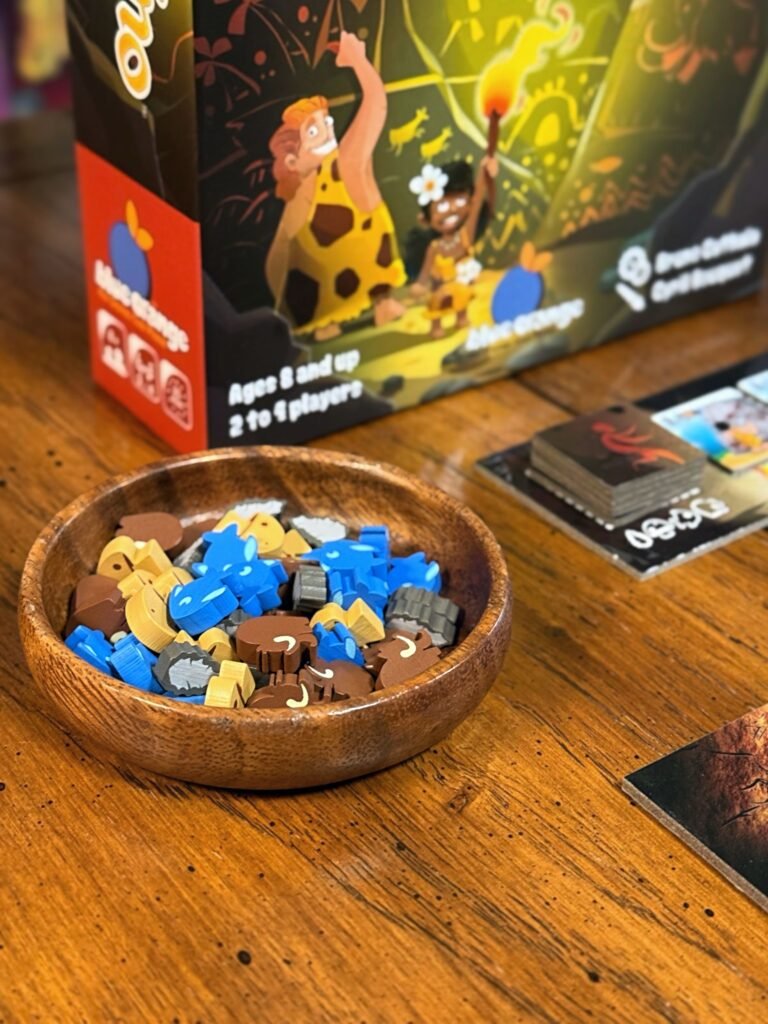
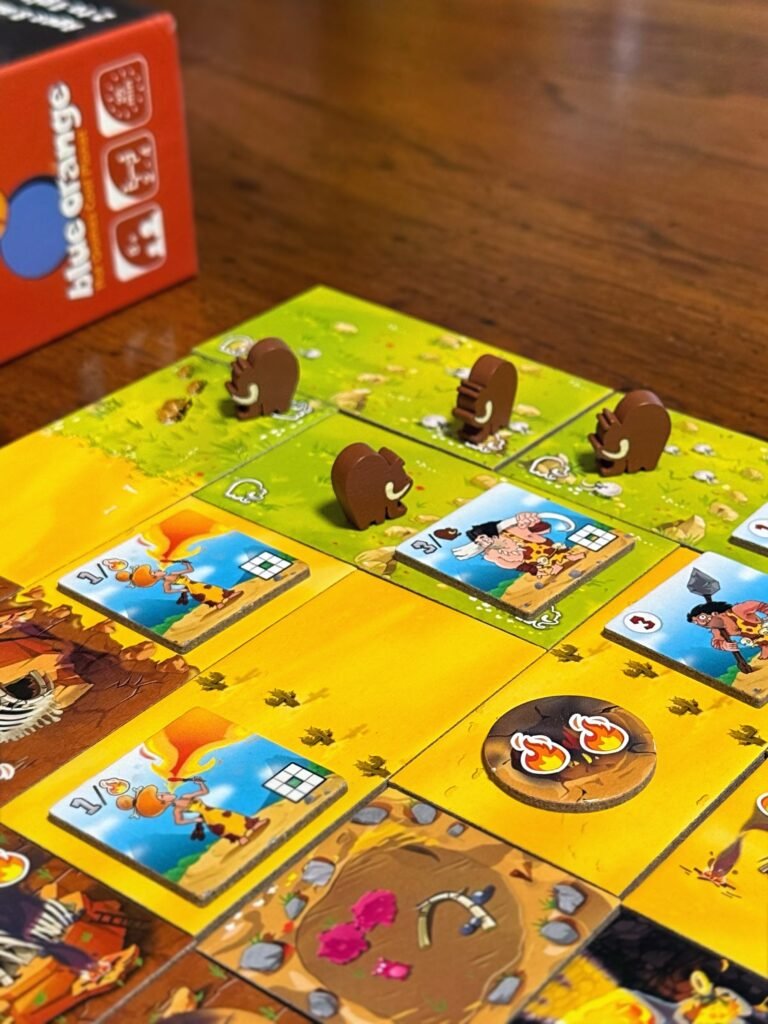
Totem Mode layers in resources, woolly mammoths, fish, mushrooms, that ride in on your drafted tiles. Collect the majority in any category and you’ll claim the matching totem, worth a handful of bonus points. It’s a tug-of-war that looks cuter than it is consequential; the totems are fun to fight over, but the scoring bump isn’t seismic. For us, Totem Mode shines mainly as a bridge, because once you’re here…
Tribe Mode arrives.
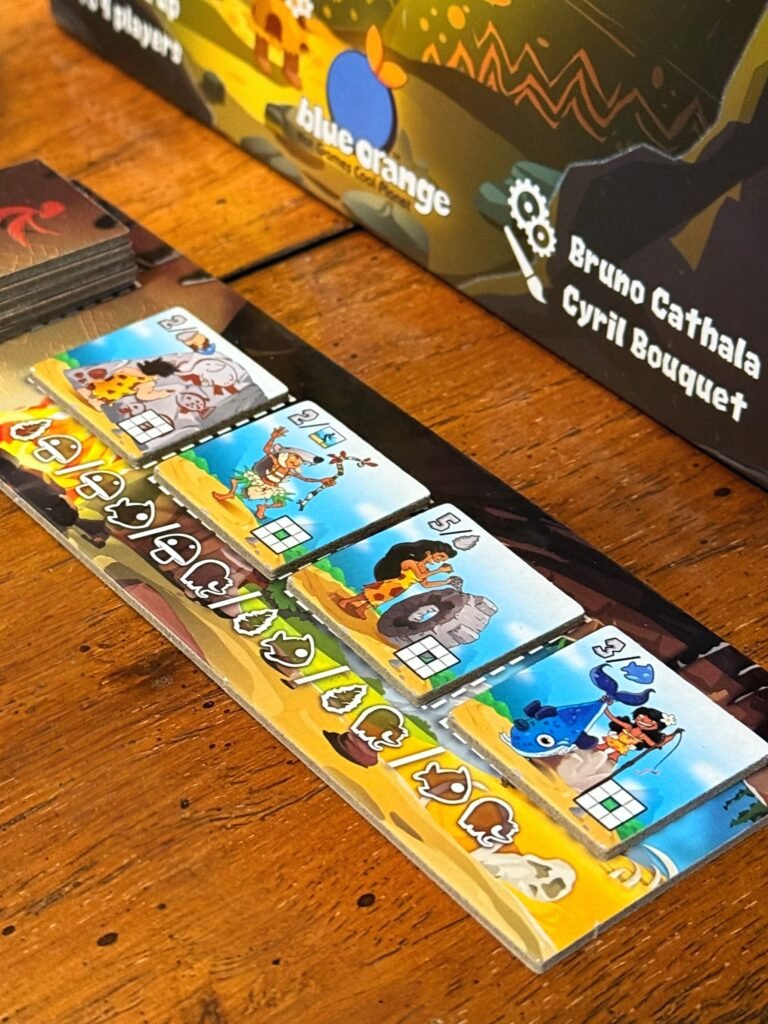
Suddenly, those resources become currency. Spend them to recruit cavemen tiles, each one scoring in quirky, puzzle-y ways: warriors cluster for big multipliers, hunter-gatherers care about what surrounds them. Now the game stretches longer, AP creeps in, and decisions feel juicier. It’s reminiscent of Queendomino’s buildings, an extra layer of optimization that makes Origins less of a family filler and more of a “let’s sit down and think this through” experience. For us, Tribe Mode was the sweet spot, the reason to keep Origins even though Kingdomino already lived on our shelf.
Do You Need It?
So, is Kingdomino Origins necessary? That depends.
If you’ve played the original dozens of times and long for new twists, Origins is your definitive upgrade. The volcano mechanic alone breathes fresh life, and the extra modes mean it will grow with your group. If you don’t own Kingdomino at all, this is probably the best entry point; everything great about the original, plus more knobs to turn when you’re ready.
But if your base copy only hits the table once in a blue moon? Origins won’t magically ignite a flame. It’s still Kingdomino at heart: light, quick, clever, and charming.
Scratching Our Itch
For us, though? Origins scratched the itch. It’s our new favourite way to play Kingdomino; a welcome addition in the saga. Volcanoes, mammoths, and cavemen may not be strictly necessary, but they are irresistibly fun. And even if we didn’t scratch the itch and buy the game ourselves, we’re super grateful that Blue Orange Games sent it our way.
Corinna’s Rating: 8.5
Duncan’s Rating: 8.9
Check out Kingdomino Origins on Board Game Geek for more information
A copy of this game was generously provided by Blue Orange Games for content creation.




Leave a Reply