
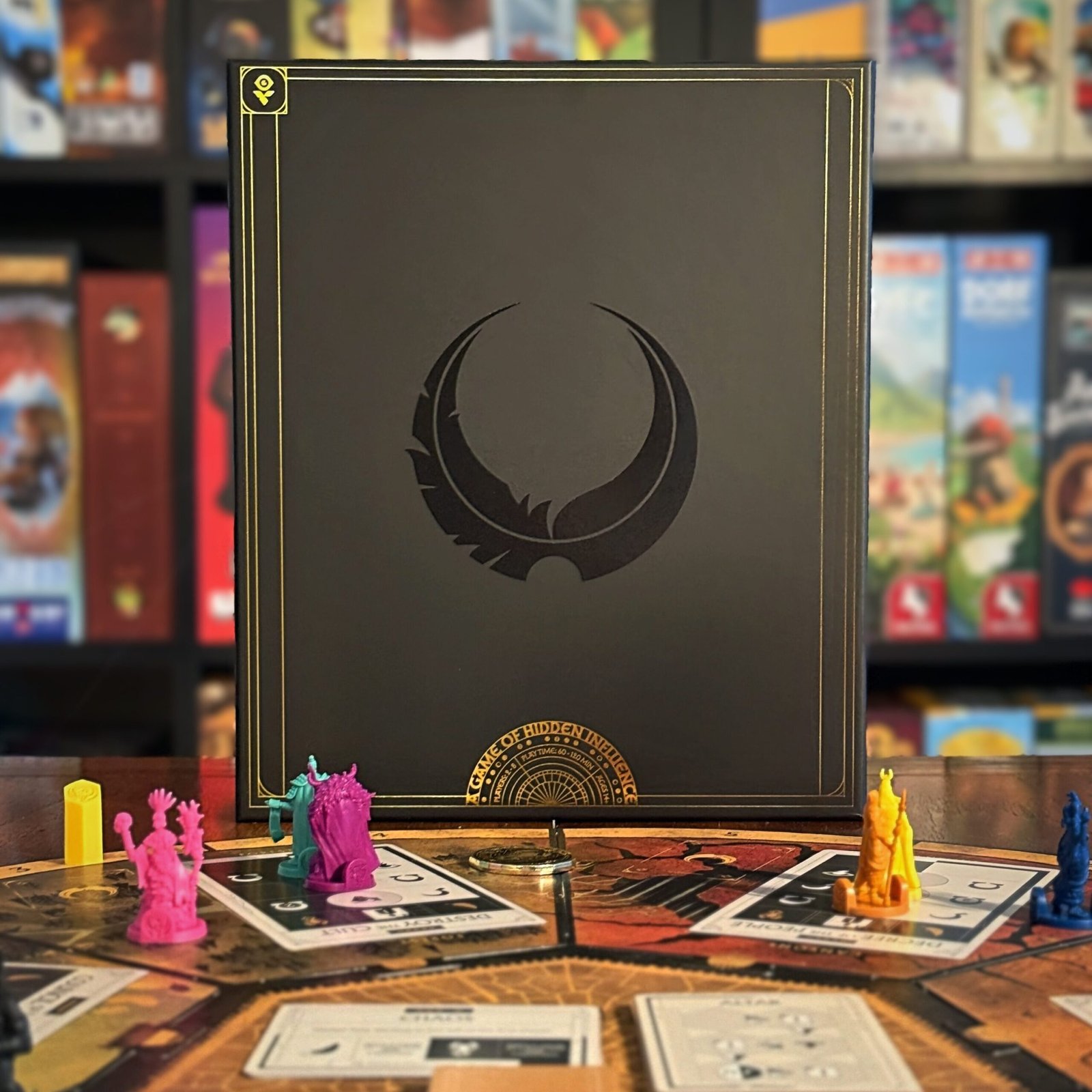
Board games have become our rotating art gallery, and honestly, that’s for the best. Our tastes in art are all over the place: from soft, fairytale whimsy with critters and mushrooms, to cottage-core forests with lanterns and moss, clean minimalism, neon punk, moody realism, and even the squishy, bendy quality of rubber hose animation. We love intricate detail as much as bold simplicity, saturated vibrancy as much as stark monochrome. And because our tastes change daily, we’ll just keep the art on a game shelf; they can all coexist in perfect harmony.
That’s part of why we’ll never get tattoos. We’re blank canvases by choice, not because we don’t love art, but because we’d never be able to commit to a single style for life. But if there was ever a board game that looked like it was practically designed to be tattooed, it’s Veiled Fate.
Linework That Cuts Deep
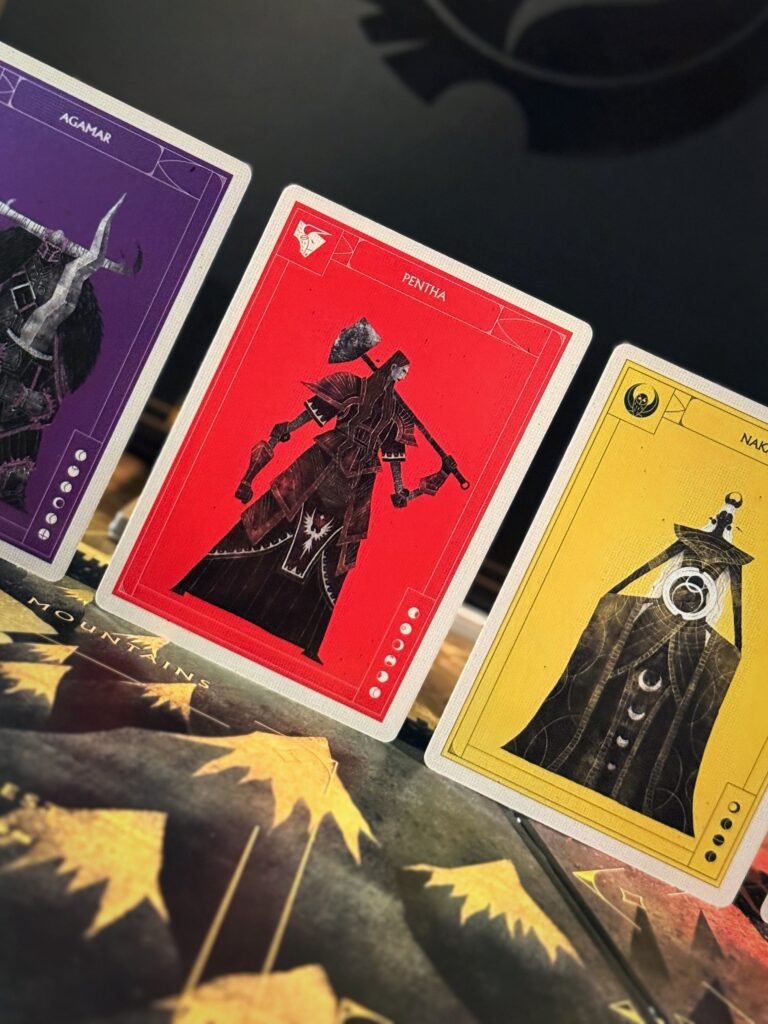
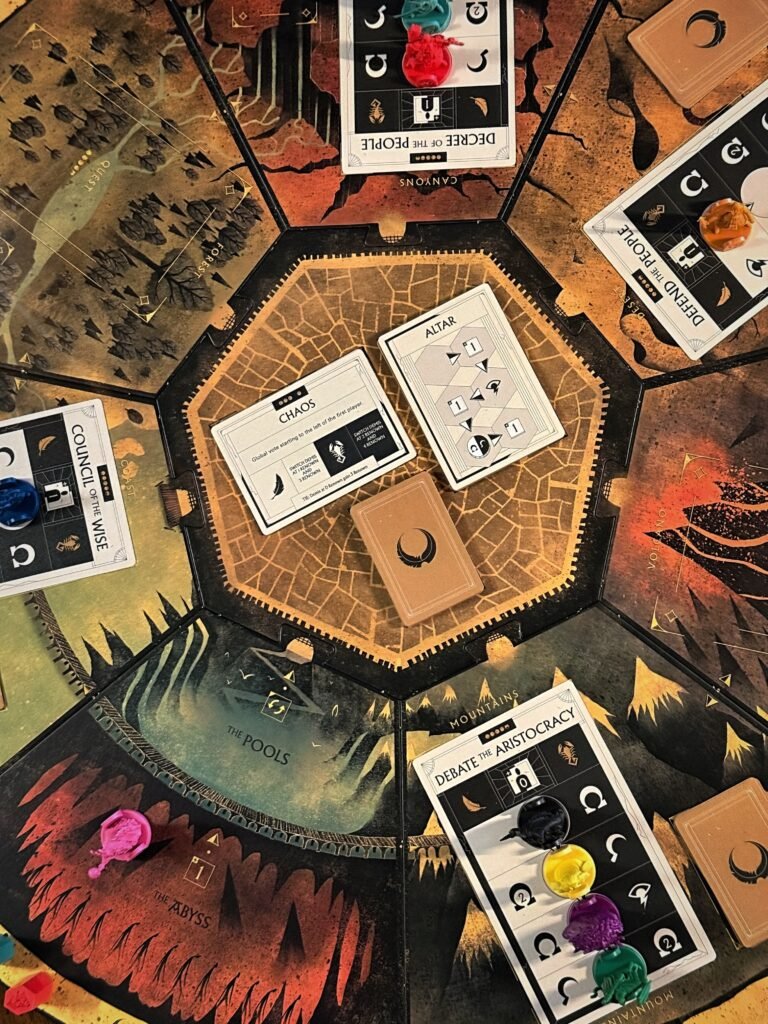
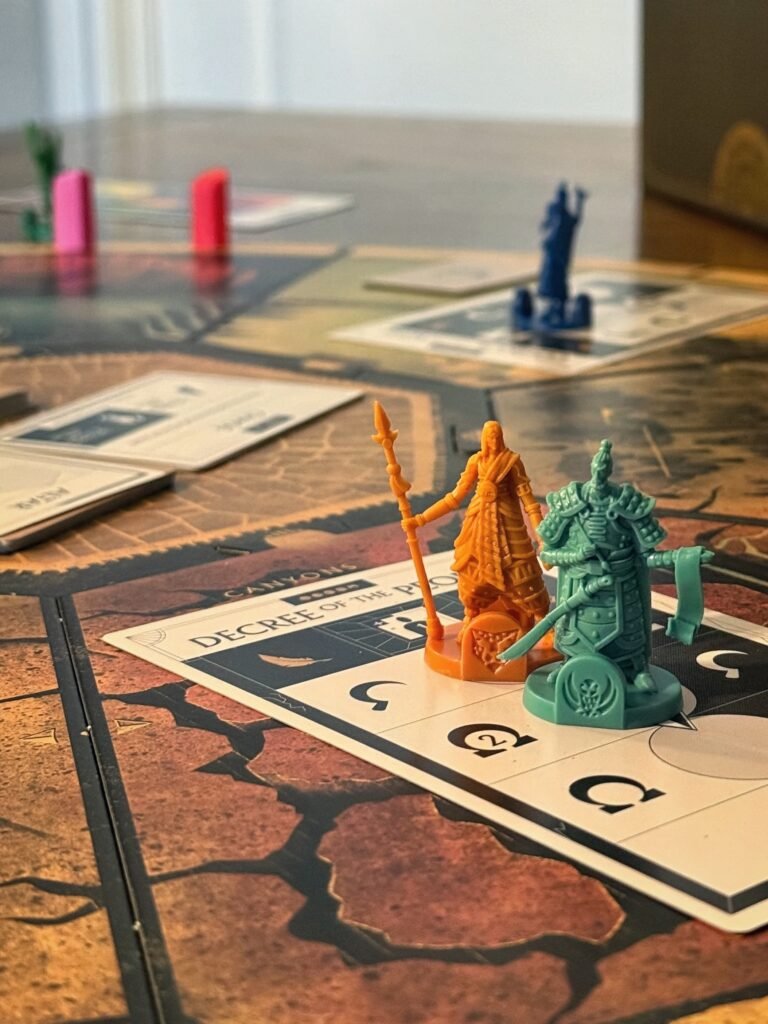
The artwork is precise, deliberate, and unapologetically bold. The demi-gods look like they’ve been carved rather than drawn, all architectural linework, weighty curves, and controlled negative space.
The style makes for a perfect tattoo; minimal yet mythic, clean yet dramatic. Deep shadows meet restrained jewel tones, giving the figures a sculptural, almost timeless quality.
Each character breathes in their own frame, commanding attention. Honestly, slap any of them on a bicep, and you’d have people asking for your tattoo artist’s business card.
Sold On A Whisper
The art hooked us before we even knew what the game was about. And once we heard whispers that it was a “large-group deduction game,” our curiosity got the better of us. A hidden-identity game with that kind of visual flair? Sold. We dove in expecting a heady mix of bluffing, deduction, and suspicion—the kind of game where accusing your partner in crime feels inevitable. But Veiled Fate didn’t quite deliver the experience we thought we were getting.
Rules Overview
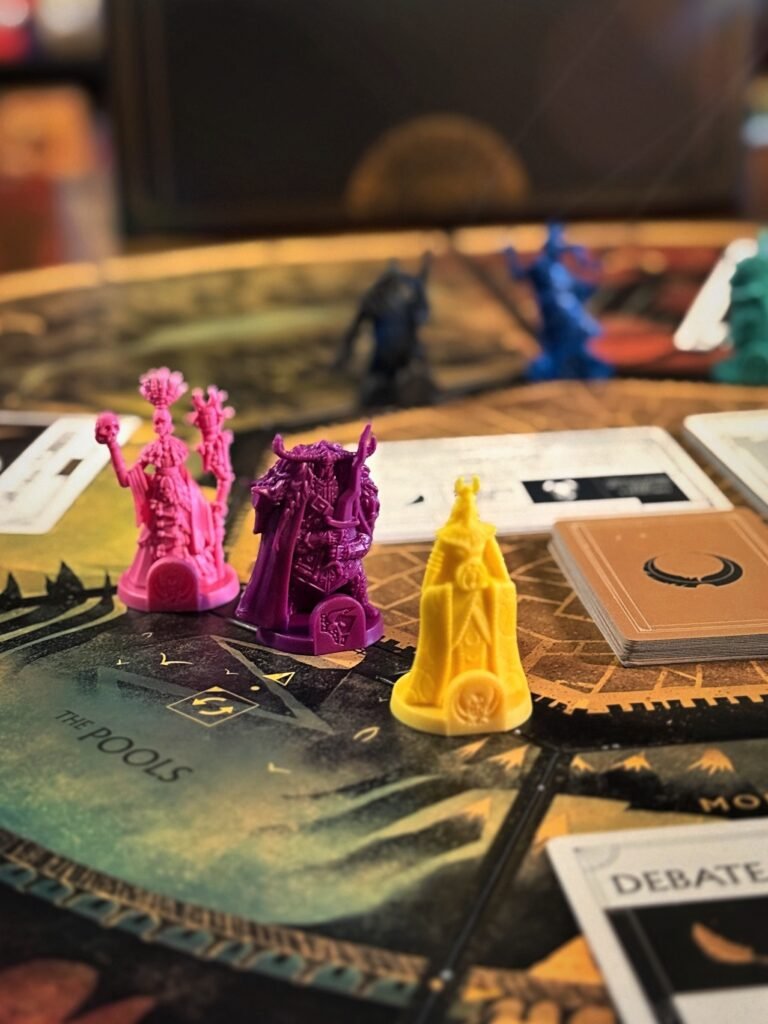
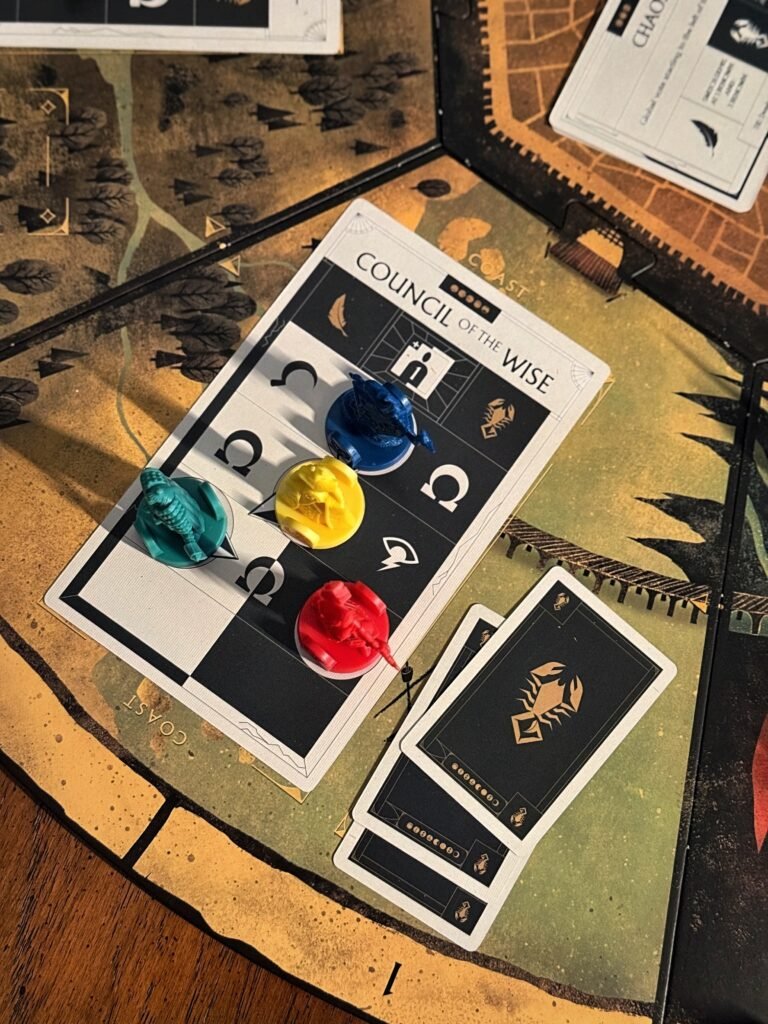
At the start, everyone is secretly assigned a demigod from a lineup of nine. On your turn, you get two actions, which usually means moving demi-gods around a map of regions and onto quests.
Quests are the beating heart of the game: each one resolves in one of two ways, feather side or scorpion side, depending on a pile of secretly played fate cards. Place a demi-god on a quest, toss a card into the pile, shuffle it all up, reveal the majority, and boom: some demi-gods gain renown, others lose it.
After three “ages” of maneuvering, the demi-god with the most renown is crowned heir to the throne, and their hidden controller wins.
Deduction Declawed
On paper, it sounds juicy.
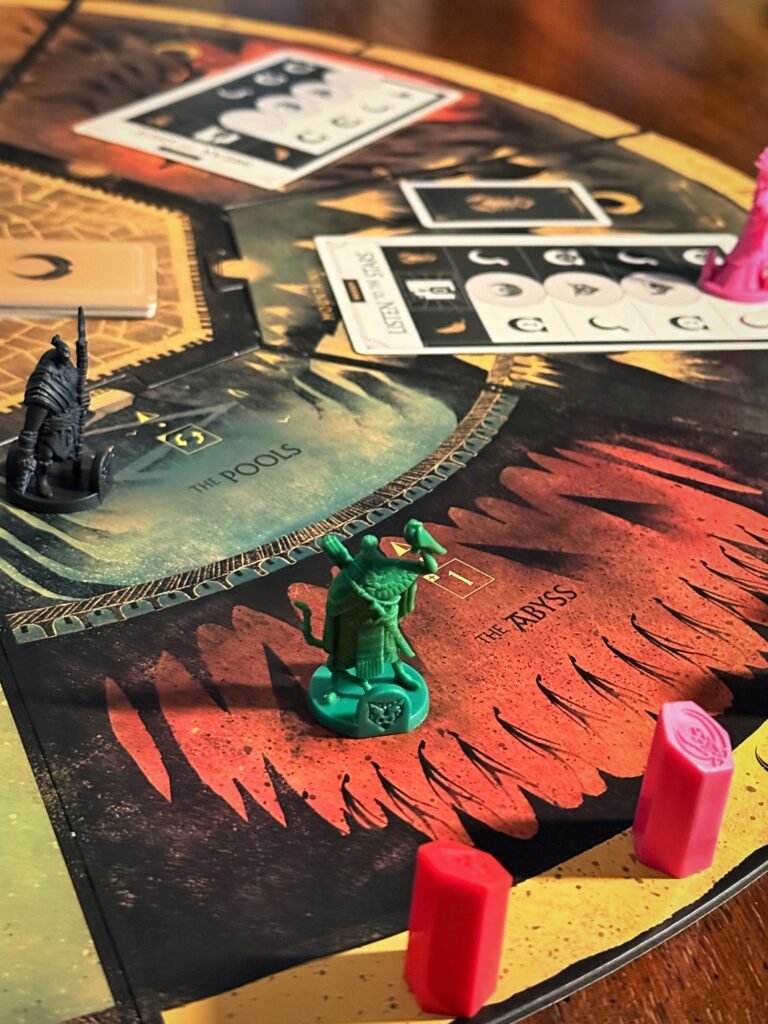
Everyone can move every demi-god, so you’re constantly trying to help your own without making it obvious, while nudging others into failure. You can burn fate cards to activate flashy god powers, shift pieces in sneaky ways, or banish rivals to the Abyss. The game is a push-and-pull of misdirection: do you risk exposing yourself for a quick boost, or hide in the crowd and hope no one notices until it’s too late?
But in practice, things felt… procedural. A little too neat. Bluffing and deduction exist, sure, but they’re muffled, tidied up by structure and predictability. Unlike a true social deduction game, where suspicion and chaos fuel the tension, here the “deduction” feels more like bookkeeping: watching who moves what, tallying up probabilities, occasionally smirking when someone tips their hand. The stakes don’t escalate so much as glide forward.
Tension That Trickles
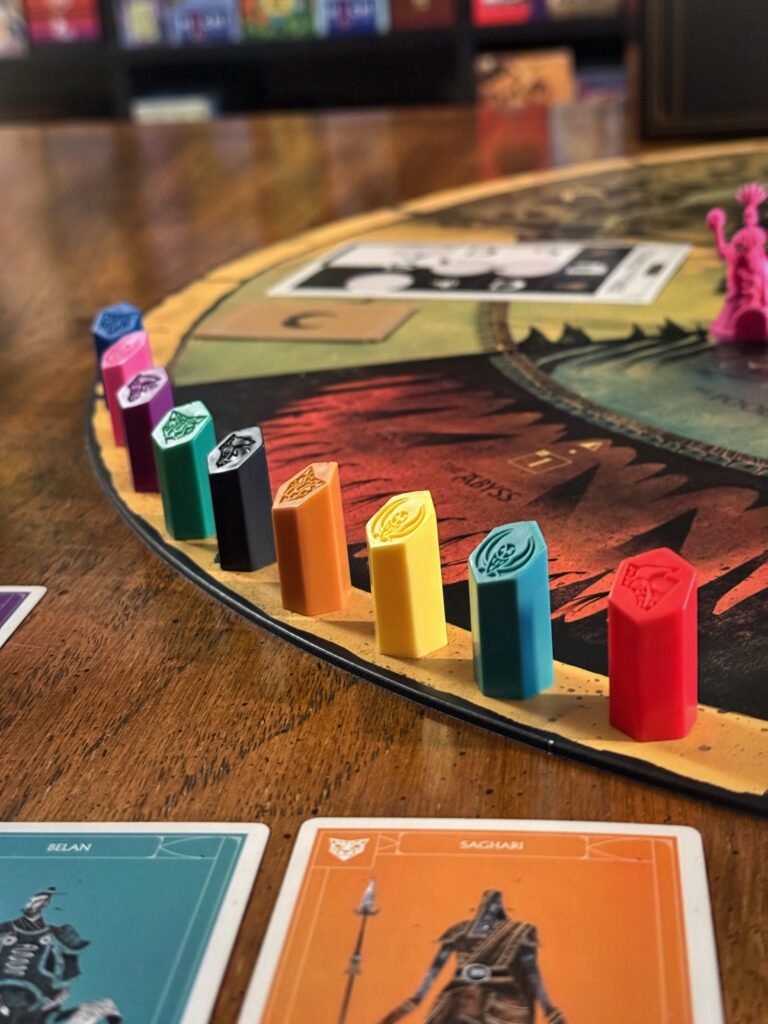
That’s not to say there isn’t fun. Watching quests flip is satisfying, and hiding in plain sight can be deliciously tense for a while. But as the game progresses, identities leak out, and once you know who someone is, there’s no real drama to it just the dull inevitability of trying to stifle their lead. Worse, a runaway leader can become nearly untouchable, while someone who falls behind early might as well settle in with a snack, because there’s little to claw back with. Without strong catch-up mechanics, the arc can feel decided long before the grand reveal.
Expectations vs. Reality
And maybe that’s partly on us. We went in thinking we were getting a rowdy social deduction showdown, full of accusations, bluffing, and table theatrics. What we actually got was a strategic influence game with some deduction sprinkled on top. Our disappointment was as much about mismatched expectations as the game itself.
Final Thoughts
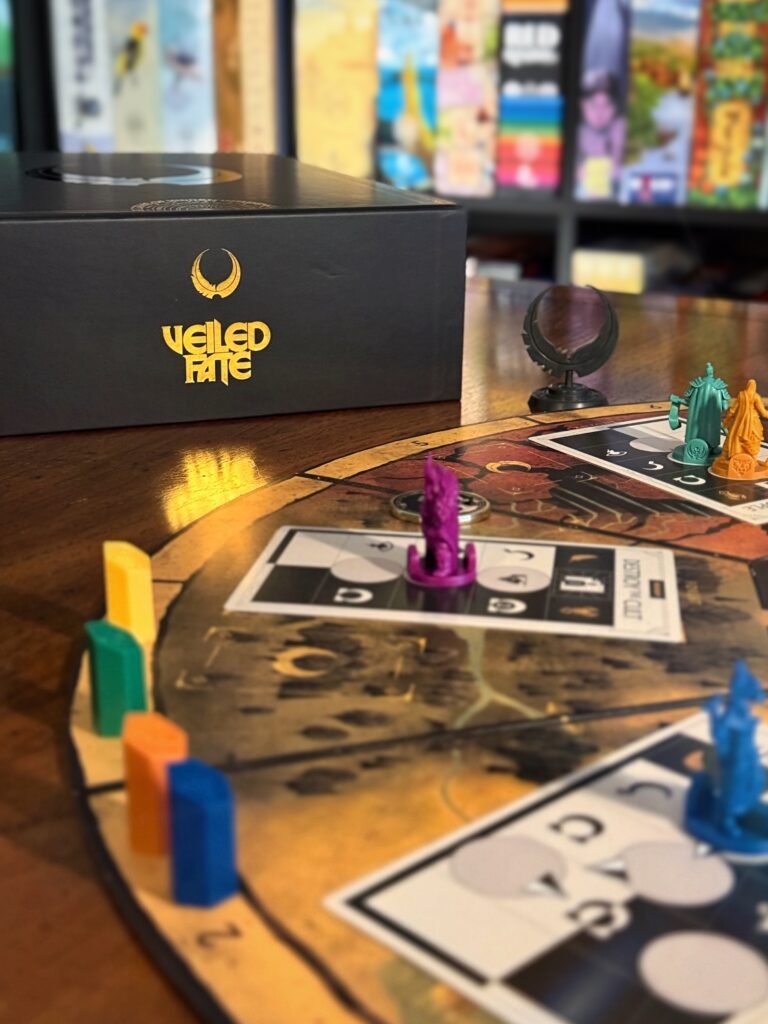
Do we regret playing? No. Do we love it? No. But do we love looking at it? Absolutely. Veiled Fate is an art book in a box, a collection of mythic flash pieces begging to be inked. We may never play it again, or maybe we’ll give it another chance on a better night with a bigger group. Either way, the demigods will stay on our shelf to be admired.
After all, we’re not about to get tattoos. But if we did? We’d bring Veiled Fate to the parlour.
Corinna’s Rating: 6.9
Duncan’s Rating: 6.6
Check out Veiled Fate on Board Game Geek for more information.
A copy of this game was generously provided by IV Studio for content creation.