Not Everything That Glitters Actually Glitters
It’s hard to believe in love at first sight. Too many times we’ve been seduced by gorgeous art or a mechanic that sounded tailor-made for our tastes, only to find the game fizzled after a single play. These days, we don’t back campaigns, and we don’t ride hype trains. We wait. If a game’s still being talked about long after the confetti settles, then maybe we’ll give it a look.
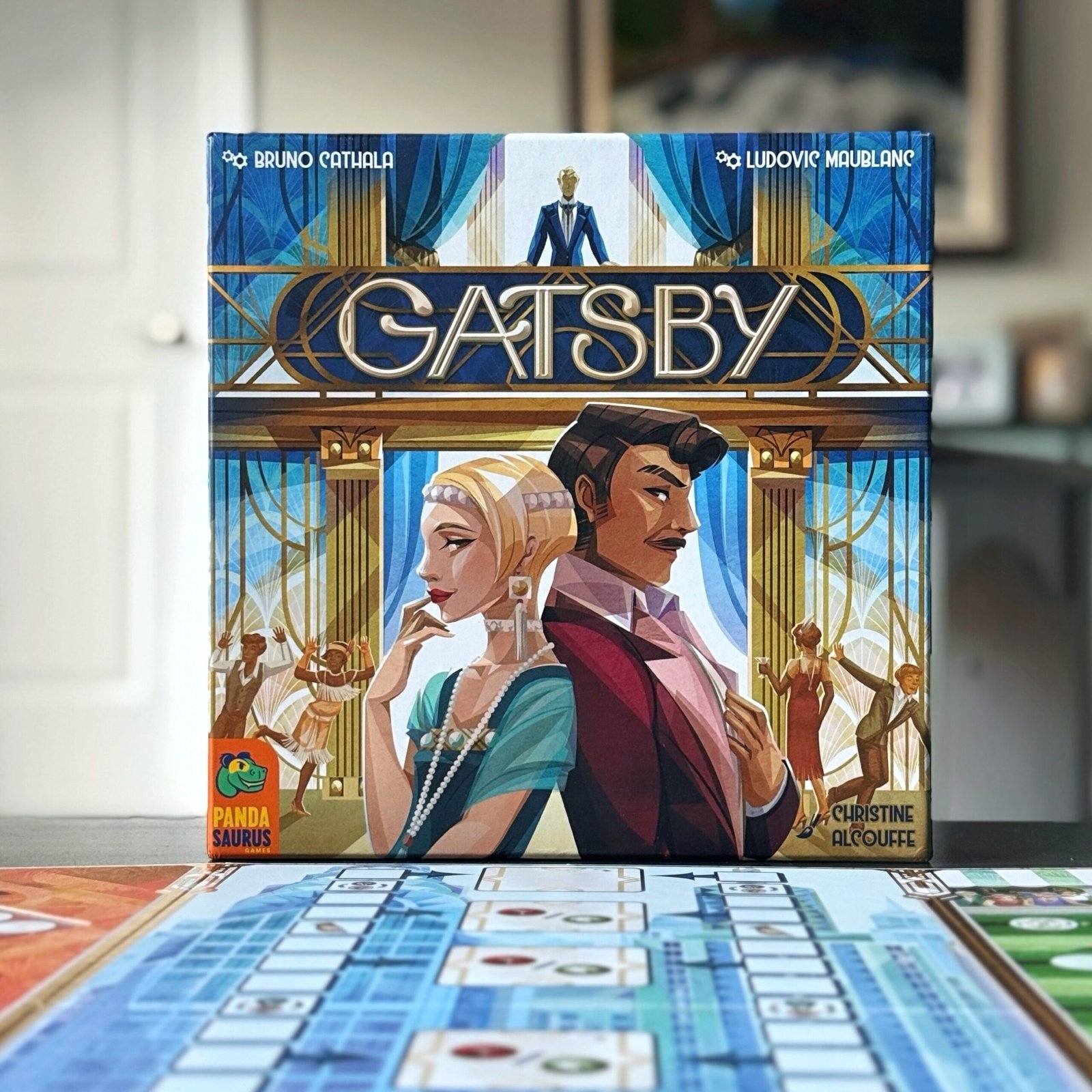
That’s why Gatsby threw us off. The box wasn’t much to look at. The mechanics read like déjà vu. The theme didn’t exactly sweep us off our feet. And yet, one play in, we were hooked. Love at first play.
Don’t Underestimate Simplicity
Even the production doesn’t try too hard.
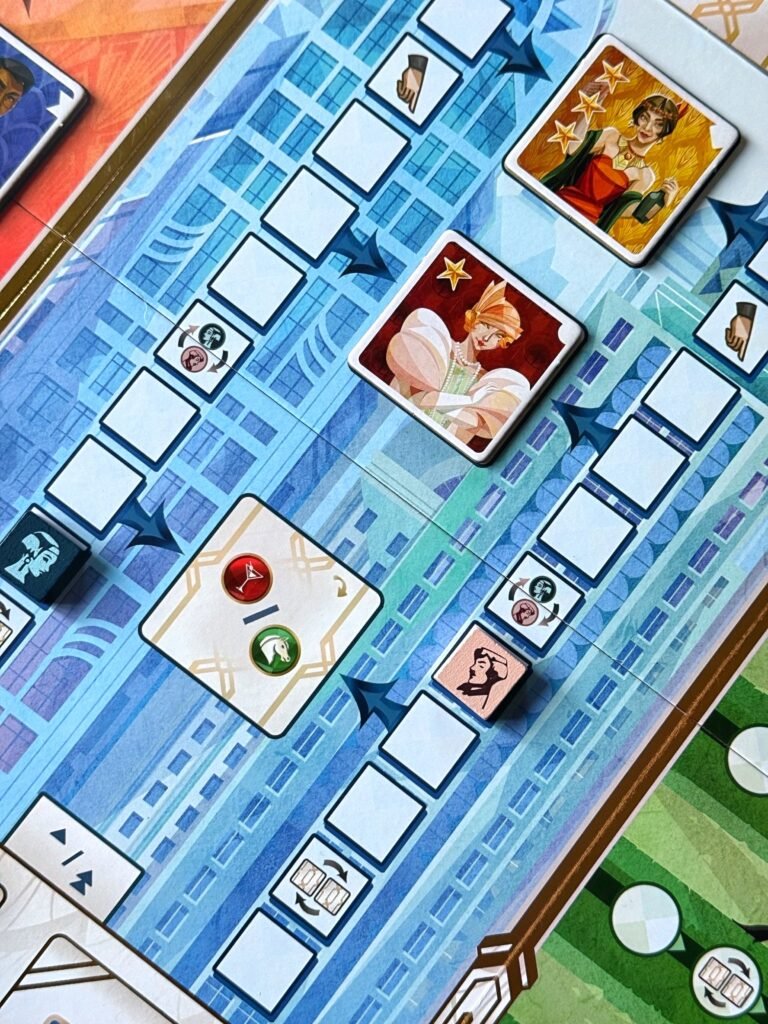
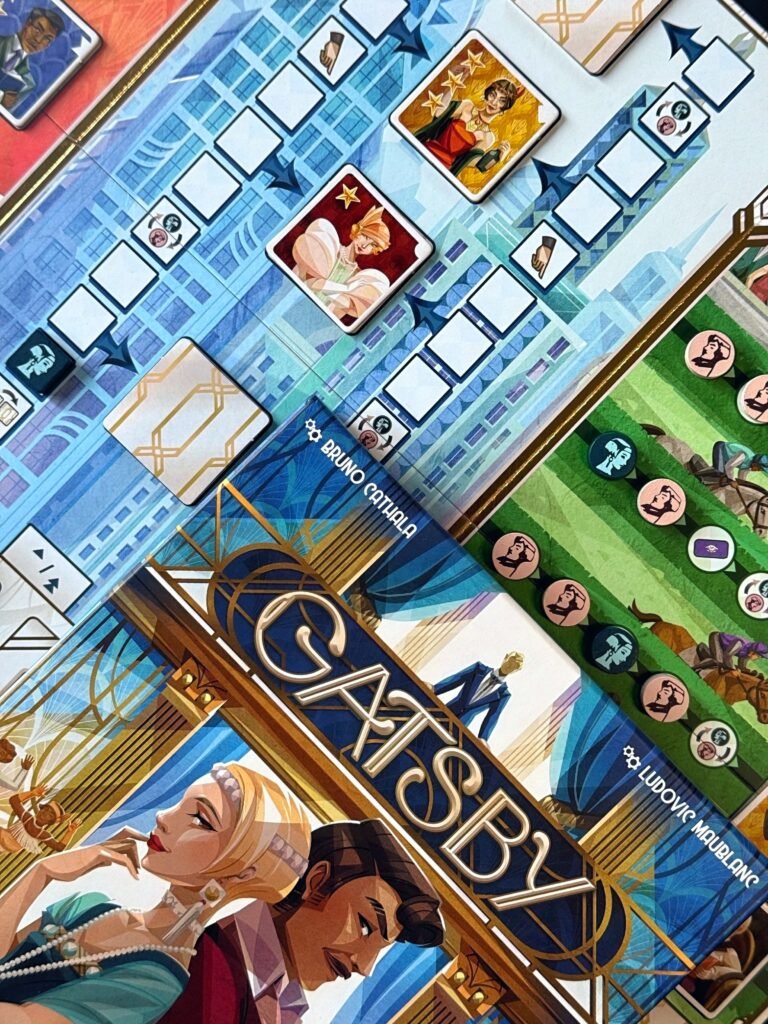
The board looks like something generated by Excel, and apart from a flicker of gold foil, the components are understated.
But when the pieces hit the table, something happens. The duel begins, and suddenly you’re in a razor-sharp waltz of timing, blocking, and adaptation.
Flirtation, Sabotage, and Jazz Age Shenangigans
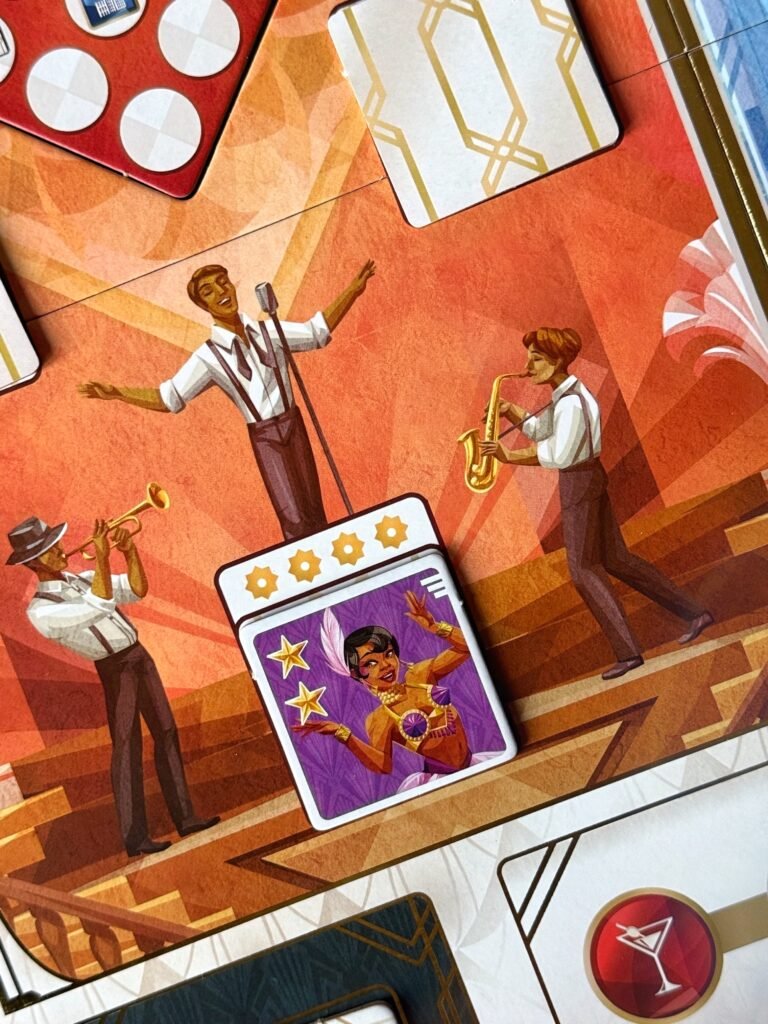
The theme is pure Jazz Age drama. You step into the roles of Dorothy Williams or James Miller, each vying for Gatsby’s favour across the Cabaret, Finance Center, and Racetrack. Turns are clean: pick an action, place a piece, and execute. Sometimes that space tosses in a sly bonus: maybe peeking at a facedown guest, meddling with their position (or faking it to stir paranoia), swapping spaces, or even dictating your opponent’s next move.
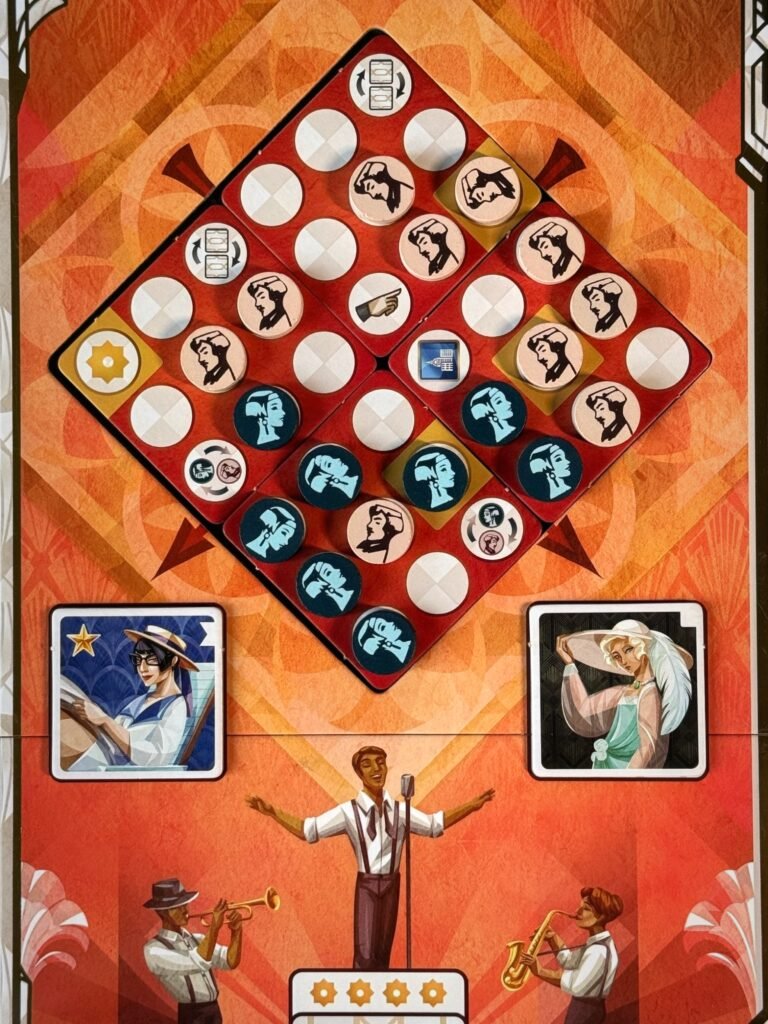
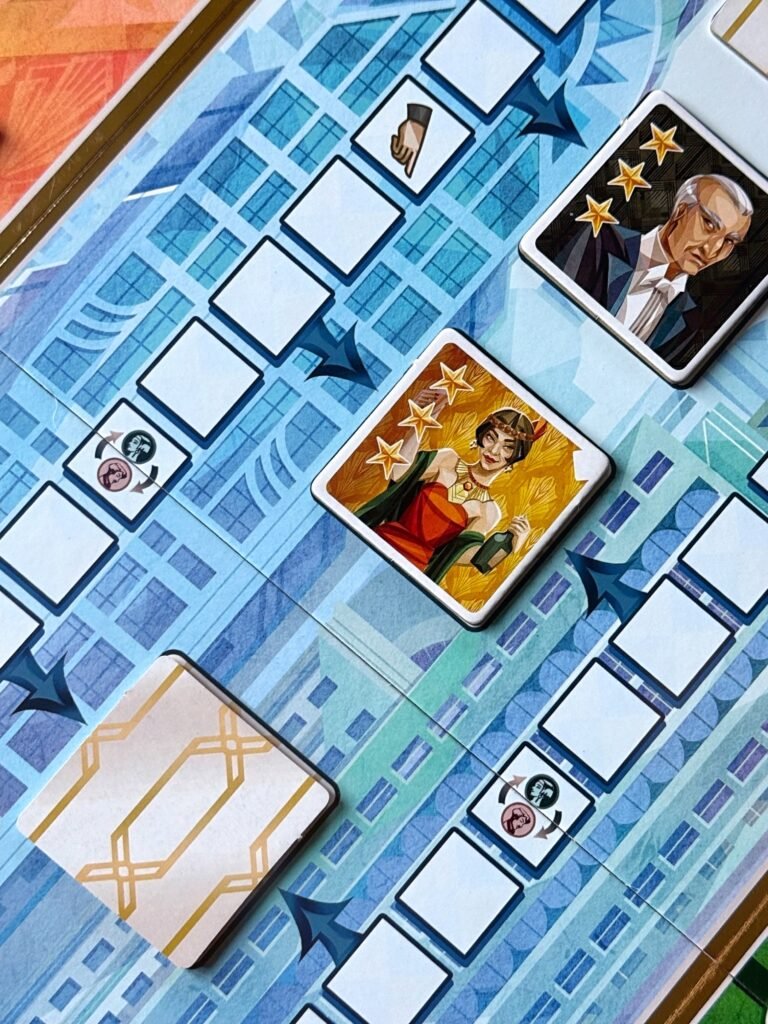
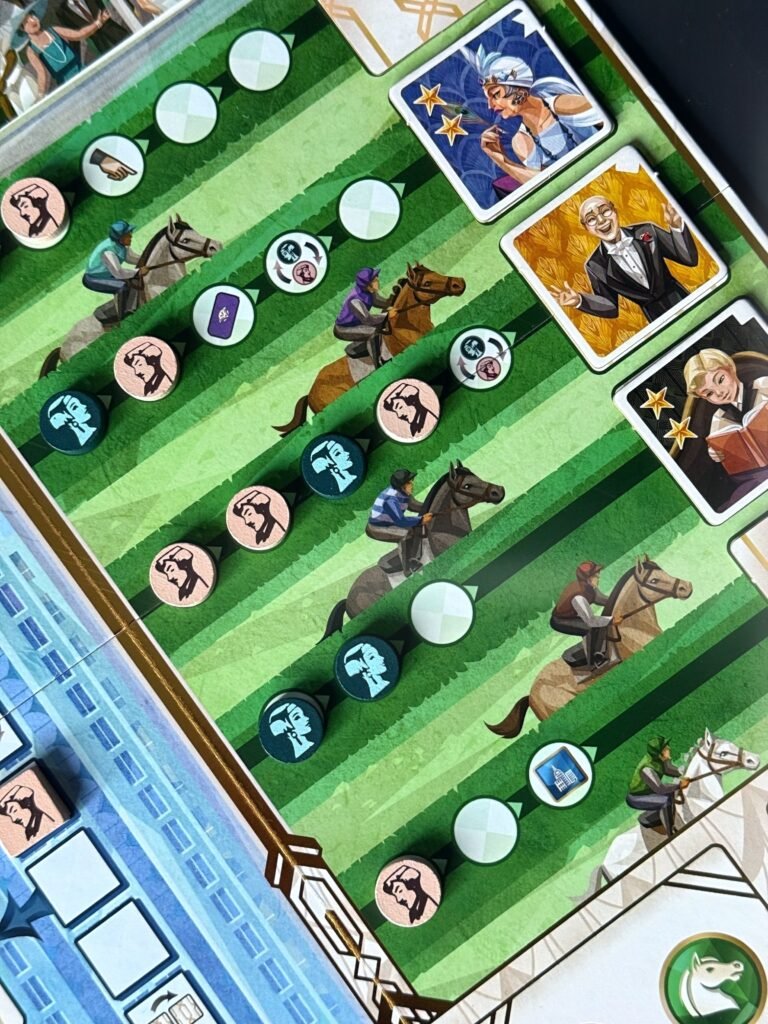
These little twists make every turn highly interactive and wonderfully conniving, where each choice nudges your plan forward while tightening the noose on theirs. Timing your plays to corner your rival, forcing them into suboptimal choices, it’s a deliciously strategic push-and-pull that rewards planning, anticipation, and a little audacity.
Two Players, One Tense Spotlight
In today’s flood of new two-player games, the spotlight is intense; every decision, bluff, and mistake counts, with no third party to shake things up. Games that rely on a single path to victory risk becoming predictable puzzles, but Gatsby keeps the tension razor-sharp.
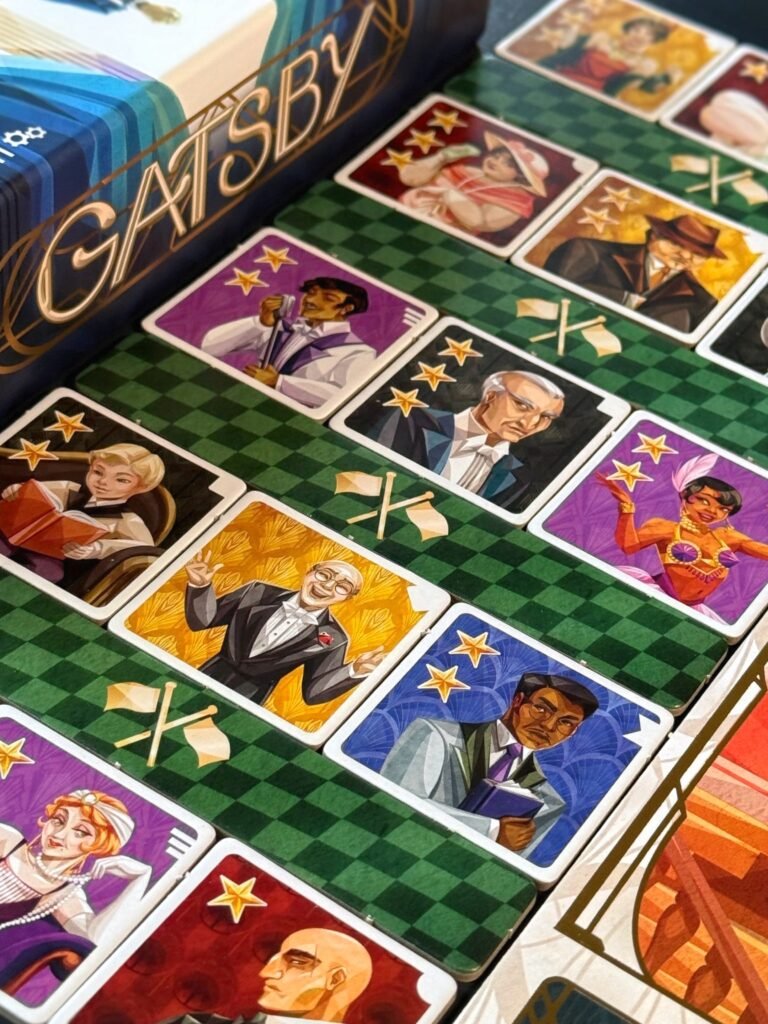
With multiple win conditions, collect sets of guests, diversify and collect one of each guest type, or hoard prestige points; every play demands reading, reacting, and occasionally sabotaging your opponent.
Your carefully laid plan can be toppled by a bold counterattack, and every pivot or suspicious move flashes like a warning. This push-and-pull keeps the air charged, the choices agonizing, and replayability alive.
The Cabaret tempts with chains and stars, the Finance Center with its climbing track, and the Racetrack with lane majority battles. Across them all, manipulation, or pretending to manipulate, is one of the most satisfying parts of the game. The push-and-pull of steering your rival rewards timing, anticipation, and audacity.
Some players might shy away from the level of interactivity: you can’t repeat the action your opponent just took, and there are opportunities to dictate parts of their turn. If you’re on the receiving end, it can feel limiting, almost controlling. But if you’re the one wielding that influence? Pure satisfaction.
Deceptively Deep
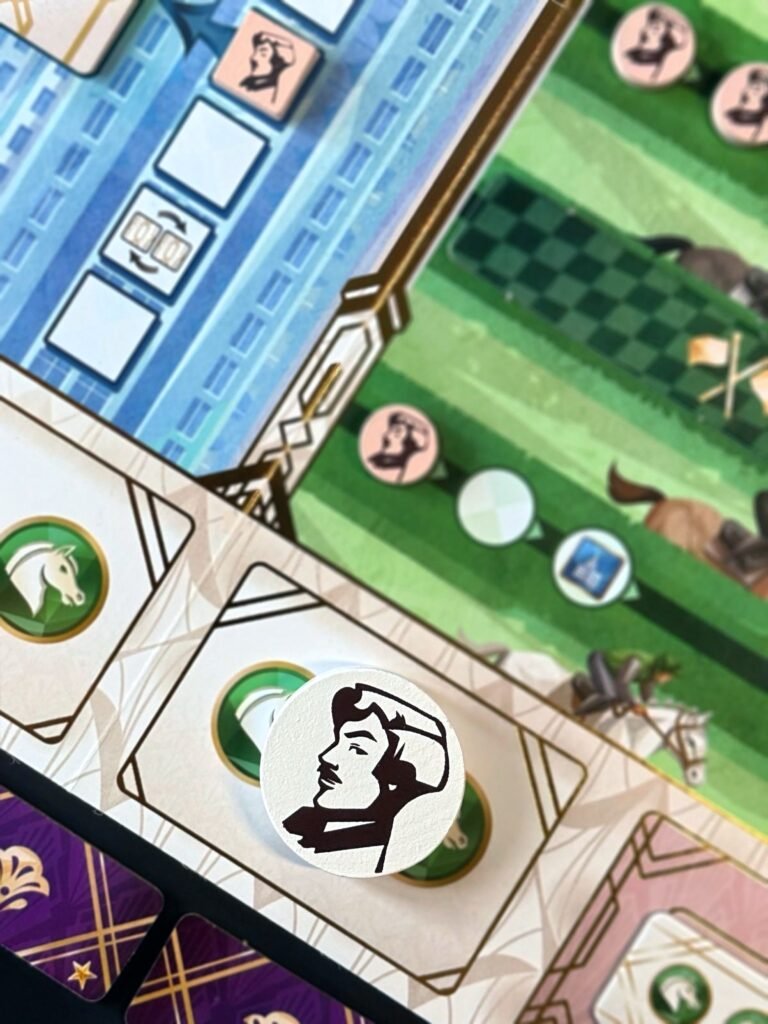
Underneath the clean ruleset lies a strategy worthy of attention. Casual players can dive in immediately, while those craving depth will discover intricate combos, clever bluffs, and perfectly timed sequences. Even something as simple as shuffling character tiles can plant paranoia and create brilliant moments of mind games.
Final Thoughts
Gatsby isn’t flashy, but it doesn’t need to be. Sharp, tense, and ruthlessly interactive, it’s a duel where adaptability beats memorization. With multiple paths to victory, every game keeps you guessing, no two matches feel the same, and every two-player duel crackles with tension.
A glorious game from Bruno Cathala and Ludovic Maublanc, definitely worth exploring
Corinna’s Rating: 7.8
Duncan’s Rating: 8.8
Check out Gatsby on Board Game Geek for more information.
A copy of this game was generously provided by Pandasaurus Games for content creation.